My friends took the shape
of vacant lawn chairs in a circle
because I skanked naked
in the living room until dawn
Dawn with its fistful of ants
tossed at my face
or some shit like that
Maybe punk rock died
twenty years ago
in the graffitied bathroom
of some basement
in Brick New Jersey
in the face of a mirror
plowing snow into lines
so orderly and offensive
Maybe punk rock died
when the talentless owned
their lack of talent
the way I own this house
I rent out
by which I mean
I owe nothing but a shelf
of books I don’t have time to read
There’s Vestrini there’s Bonney
And isn’t it always the case
Aren’t you too inundated
Aren’t you tired of paying
the electric bill the water bill
tired of the time it takes
to wash your clothes stiff with sweat
to scour your body crusted in salt
to scrub the dishes in the sink
submerged like some Atlantis
Aren’t you tired of the clink
the glass makes when ice falls into it
a bell each day at noon
calling you back to yourself until
the moon shows up then dips again
My friends bailed out in bathrooms
and garages
foaming at the mouth
Four cigs left in the pack
and half a cup of coffee
gone cold
colder than his skin in the morgue
But no one touched it
no one emptied the cup
or took a cig
out of respect I guess
but for the life of me
I wanted to take a swig
I knew it’d be black and bitter
no sugar I wanted
to take a cig without asking
from the black pack of American Spirits
and smoke it slow
watching what forms a column of ash
This is where I’m at
This must be the place
where all hate dries out
when you’re lying on the ground
and the world kicks you in the ribs
again and again and again
Like the time Frankie’s friends
didn’t kick me in the ribs
because Frankie handled it himself
Not one of my friends showed up
but I’m not blaming them

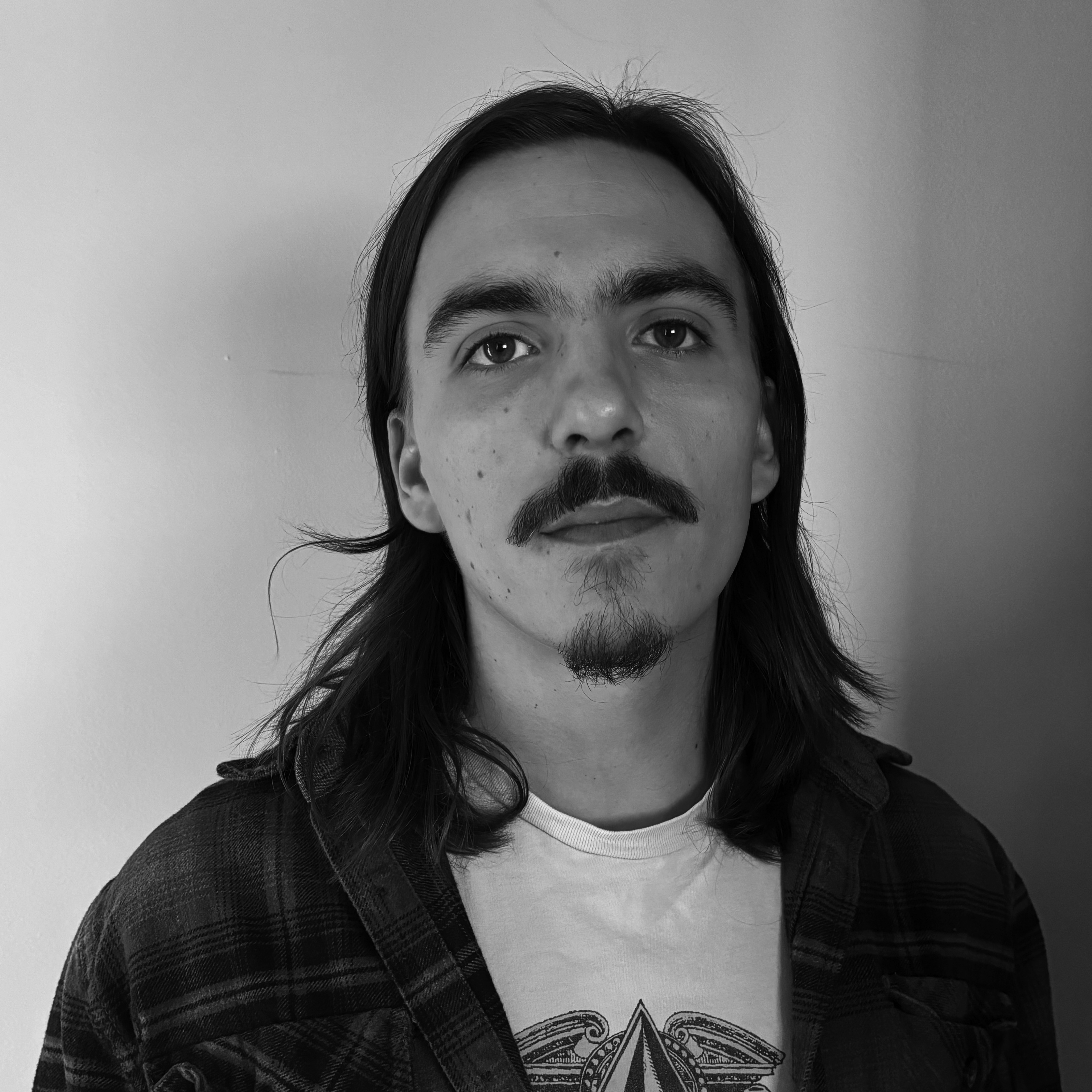
Max Lasky’s poems are published or forthcoming in American Poetry Review, Painted Bride Quarterly, Frontier Poetry, Heavy Feather Review, The Indianapolis Review, OxMag, and elsewhere. He is the co-founder and editor-in-chief of Leavings. Though maybe not a traditional revenge story, he loves Dostoevsky’s Crime and Punishment. When Raskolnikov, near the end of the novel, turns himself into the authorities, Lasky sees the character not only submitting to justice, but also seeking a kind of vengeance on the self, a way to right the psychological troubles Raskolnikov experienced in the wake of the crime he committed.