The garden is where I go to sweat when I can no longer stand to think or feel, and it works, because there is always so much to do. I set it up that way on purpose, starting more projects than any one person will ever have time to complete, but it didn’t work last Sunday because it’s not possible to not feel something when you find a prostitute’s glass slipper half-buried in the rose garden. Not really glass——clear plastic with facets that want to look like glass on top of nine-inch heels. I know why it’s there, and I like the person it once belonged to, but still. Feelings.
I have a tomato garden, a pumpkin garden, an herb garden and a succulent garden, but the rose garden is my favorite. During the drought I kept it alive with dirty water from the shower, but we had so much rain this past winter that it’s now thriving on its own. Blood-red Mister Lincoln, two-toned Double Delight, and the David Austin Gertrude Jekyll that my neighbor gave me last year because it was too blowsy for him. The roses are surrounded by purple agapanthus, pink Mexican Evening Primrose and gold coreopsis that I hope make my front yard look like a wild meadow rather than an over-cultivated suburban border. Because I do live in a suburb. The south part of North Hollywood. Not as run-down as Hollywood Hollywood and not as glamorous as Toluca Lake, but close enough to Universal City that I can see Hogwarts from my house.
I don’t know most of my neighbors. Everyone keeps themselves to themselves here, which is why once upon a time we had an actual princess living on the block. Dating a Hollywood restaurateur and looking for an anonymous place to relax, she rented a house across the street that has a kidney-shaped swimming pool, a six-foot-high fence, and a sadly monochromatic succulent garden. No one knew she was there until a photographer in a camouflage vest asked my neighbor Kate if he could take photos of her backyard for a French magazine spread on the sunny Southern California mode de vie?
Katie was proud of the raised bed she’d cultivated in a corner of her weed-infested yard and she hoped he’d take a picture of her standing next to it. Two tomato plants and a fragrant patch of wild mint. Nothing like the lush Hawaiian oasis the landscape architect who lives next door to her had created, but surely print-worthy nonetheless? Unfortunately, she eventually had to call 911 when the photographer used a crowbar he’d hidden in his pants to pull a board out of her fence so he could snatch a picture of the princess lying topless on a chaise longue by the pool. Katie, the kindest, most forgiving mother of two daughters I know, yelled “Stay right there, motherfucker,” and locked her gate with a rake to trap him in until the police arrived ten minutes later. The princess moved away soon afterwards. The photographer had his film confiscated and his visa revoked. It turned out he wasn’t even French.
The prostitute is also called Princess, but with nothing following it. A name rather than a title. A year and a half ago my son brought her home late one Sunday night because the man she was having sex with tried to strangle her with his bathrobe. She ran out into the rain and called Adam – whom she’d met when he was her Uber driver – from a phone booth. I didn’t think there were any phone booths left in Los Angeles, but it turns out that low-rent motels on Sepulveda Boulevard still have them. The street “where nobody’s dreams come true,” as Dr. Demento used to say.
My own next-door neighbor is an eighty-year-old woman named Ida who lives with three birds and told me that God hated me after I called the Department of Building and Safety to report that she had built an eight-foot-high plastic fence between our driveways. She relented after the fence was shortened and she realized she could lean on it to talk at me non-stop while I work in my garden. Over the years, she has warmed to me and often tells me harrowing stories about growing up dirt-floor poor in Louisiana. She eventually allowed me to feed her rosebushes and prune her fruit trees. Now when she sees me, she clutches my sleeve and tells me how much she likes me. “You are a good person,” she says, and I’m happy to believe her. These accolades always end with a diatribe against President Biden, who is obviously controlled by Obama, whom she hates because he is a Muslim. Then she scurries away so she doesn’t miss her favorite programs on NewsMax and Fox. She politely ignores the 2008 Hillary Clinton sticker I’ve never taken off my car. I was pretty sure she wouldn’t be happy to come home from church and see a homeless man camped out on her lush lawn.
He arrived last Sunday, just after I found the glass slipper. I’d planned all week to spend the day planting some rosebushes I’d bought the weekend before. It was a perfect day for gardening——just enough June gloom that I could work hard without being blinded by sweat. Crouched on the ground with my trowel, I overheard a man talking loudly on the street. These days it’s impossible to know if someone is conversing on a Bluetooth headset or responding to inner demons no one else can hear. Like the woman who walks her dog past our house every morning while she broadcasts intimate details about her marriage to someone in the ether.
I kept digging and watched as the swarthy heavyset man with a mass of gray hair at the front and luxurious black curls at the back pulled a blanket out of his backpack and spread it under the shade of Ida’s sycamore tree. He pulled his jersey shorts up over his generous stomach, adjusted his gray tank top around muscular arms and proceeded to take his shoes off and have a picnic. He unwrapped several bags of food, including a loaf of bread, a plastic carton of strawberries and several school-size cartons of chocolate milk.
I hoped he would leave after he ate. There was at least an hour before Ida would get home, but he made himself comfortable, sitting with his legs splayed out in front of him like a child. Then he lay face down on the blanket and started banging his head against the ground. Then he cradled his head in his arms and began to sob. Then he started to hump the grass. That’s when I went inside the house and asked my husband to call the police.
“Call the non-emergency line,” I said, “and tell them it’s a mental health issue.” When did I become the kind of person who calls the law because there is a person in pain having a picnic on their block? I told myself I hoped he would be transported to a mental health facility and not arrested. He wasn’t hurting anyone, except for me.
Nathan did as I asked. I knew they would pay more attention to his calm baritone than to my shrill soprano. He was on hold for a long time, but finally spoke to a woman who said they would send a car around.
“Thank you,” I said. “At least I’ll have something to say to Ida when she arrives.”
“Where are our baseball bats?” he asked. “What?” I screeched.
My rage was instantaneous and incandescent.
I used that phrase in therapy recently when I was talking about how irritated I felt when my doctor insisted that I continue to wear a brace even though it had been over a year since my wrist had been knit back together with titanium pins and a small piece of cadaver bone.
“Do you have any weapons in the house?” she’d asked, completely ignoring my pain.
“NO!” I’d yelled.
“I have to ask,” she’d said.
“I would never hurt anyone,” I’d replied, wounded that she thought I might. I’d been seeing her twice a week for the last eighteen months. She should have known me by now. “I just get really angry sometimes.”
“There are degrees. Your incandescence is someone else’s urge to maim or murder.”
“I guess so,” I’d replied, sort of mollified. Sort of not.
“What do you mean?” I yelled at Nathan again.
“I just want to know where they are.”
“They’re in the conservatory,” I said, “but you’ll never find them.”
I stalked outside to my art/gardening/library space and brought him a bat that belonged to Julio Lugo when he played for the Dodgers. It’s engraved with his name and was given to Adam when he worked at the stadium. I used to bring it to the community college where I taught Jill McDonough’s poem “We’re Human Beings” in my Literature of Baseball class, but I don’t have that job anymore, so I figured I might as well give the bat to Nathan.
I brought it into the living room and leaned it against the couch.
“I didn’t say you had to get one,” he said.
“This is the major league one,” I said. “And you never would have found it.” I don’t let people into my space because it’s a clusterfuck of paper, paint and potted plant cuttings. My one-time “sanctuary,” that I now realize is an armory full of potential weapons like X-acto knives and art books and baseball bats.
“Why are you so mad?” he asked.
I was SO mad!
“Why do you want a baseball bat?” I asked.
“Just in case,” he said.
“In case of what?”
“In case I need to protect you.”
Just when I thought I couldn’t get any madder.
“The man is asleep. I can hear him snoring from here.”
“You cause all your own problems,” Nathan said.
“What?” I shouted.
“This level of anxiety. Of anger. It’s not necessary. You’re doing it to yourself.”
“Please stop talking.”
“No,” he said, “we have to face our issues.” He goes to therapy, too. Once a month on Zoom.
“What issues?”
“The fact that we can’t talk about the smallest thing without arguing.“
“I can’t talk to you right now,” I said calmly. “Ida is here.”

I walked over to her driveway and leaned in the passenger side window.
“I like this week’s hat!” I said, admiring its wide red velvet brim and plume of green feathers plucked from her birds. “Thank you,” she mumbled, moving trembling hands away from her scarlet mouth.
“What’s happening here?” she asked.
“He’s asleep,” I said, “and we’ve called the police. You don’t have to worry.”
“I’m afraid to go into the house. But my birds.”
“It’s okay,” I said. She goes in through the back anyway, after she closes the automatic garage door. A seven-foot steel gate with spikes on top, two electric locks and a slide bolt is the only other way into her backyard.
“You’ll be safe inside. The police are going to come and help him. I’m going to stay outside and work in the garden until they do. And Nathan is here. He has a baseball bat.”
“Oh, that’s good!” she exclaimed.
“We won’t let anyone hurt you.”
“You’re such a good person.”
“That’s nice of you to say.”
“I’m going to bring you some cornbread. But not until he’s gone.”
“Thank you.” I waved until the garage door rolled all the way down. I went back to digging until I had to go inside and use the bathroom.
“Something’s happening,” Nathan said as I washed my hands. I hoped he meant the police were here.
I ran outside to see Ida’s other-side neighbor and a man I didn’t recognize standing over the snoring man. “Hello!” they said. “HELLO there!” they yelled, prodding with their voices and almost with their feet, until they saw me looking.
“He’s asleep,” I said.
“We can see that. Why is he here?”
“I don’t know. But we’ve called the police for a welfare check. I think it’s best to leave him in peace until they come.”
“Who are you?”
“I live there,” I said, pointing to my pale blue house.
“What’s your name?” my neighbor asked. As if I would give that information to a stranger just because he lives on my block. I turned and walked back to my garden. He and his friend stared after me; they finally left when they realized I wasn’t going inside.
Nathan yelled at me through the front window. “The police are on the phone!” It had been almost two hours since he called. It was dispatch, wanting to know if the man was still there.
“He’s sleeping,” I said.
“Yes, he’s still here,” Nathan said. “The woman who lives in the house is here now, too. She’s elderly. Very frail, very frightened.”
“We’ll send a car,” they promised.
A woman I know by sight stopped and started taking pictures with her purple phone. I assumed she would post them on NextDoor and felt offended on the man’s behalf. Who wants someone stealing their soul when they’re asleep? I fell asleep in Central Park once and woke up to a stranger looming over me, his eyes like cameras, assessing every feature of my face and body. I grabbed the purse I’d been using as a pillow and dashed away. He followed me until I descended into the subway and fled back to Queens.
I walked over to her Lexus, and she asked what was happening. I said we’d called for a welfare check and she thanked me, said it was so sad, so tragic, so terrible, what could we do?
I said I wished I knew.
“Here, will you give him this?” she asked, handing me a half-empty bottle of pH balanced Perfect Hydration alkaline water.
“Sure,” I said, although I’d been trying not to get too close. I wanted to both stay safe and respect boundaries. She watched as I walked over and put it next to his backpack. His eyes flickered enough for me to know he was awake. He smelled like Old Spice. I wasn’t afraid, and I would have spoken to him if my neighbor wasn’t waiting for me to come back and give her permission to go home and forget about it.
“Thank you,” I said. “That was very kind.”
“We all have to do whatever we can,” she said.
“Yes,” I agreed, and went back to digging in the dirt.
A man and his young daughter on a scooter rolled past.
“What’s wrong with that man?” she asked her dad.
“He’s sleeping.”
“But it’s daytime.”
“He got very tired,” he said and looked at me pleadingly, as if I might have a better answer.
“We called for a welfare check,” I said.
“What’s that mean?” the little girl asked.
“I asked some people to come help him,” I said.
“That was a good idea,” she replied. I appreciated that, because I wasn’t sure if it was. The dad nodded and they walked down the block just as a white Tesla sped up to the all-black McMansion that sprung up across the street a couple of years ago. It looks like a prison and obscures our view of the Verdugo Hills.
The Tesla made a screaming U-turn and stopped in front of the man. Again, I walked to the end of my driveway and waited for the car to slide up to me. I recognized my newish neighbor, who usually drives a black Escalade and works as a disaster specialist. He plays baseball with his son on the street because the house is so big, there’s no room left for a backyard. His wife had driven by a while ago, but hadn’t looked at the man, who was now lying on his back and occasionally scratching his crotch.
The small blond boy in the front seat stared at me as his window slid down. “Do we know that person?” the dad leaned over to ask. I was tempted to say yes, that’s my cousin, please leave him alone, but I said, “No, we’ve called for a . . .” when his son reached for a Dodgers cap that was sitting on the console between the seats. The man slapped his hand and shoved his son’s elbow onto his lap, all the while nodding at me as if nothing untoward had occurred.
“Welfare check,” I continued, shocked at the level of violence, and shocked that he wasn’t. “Dispatch called a little while ago,” I said. “Someone will be here soon.”
“Okay,” he said. “We’ll hang around for a while in case you need help.”
“Thanks!” I smiled.
I watched as they pulled into their driveway and unloaded little league equipment from the frunk. That’s what Tesla calls the front trunk. Like old VW bugs used to have, because the engine was in back. I don’t know where the Tesla engine lives, though, because there’s a back trunk, too. It’s called the trunk. At least that family knew where their baseball bats were, although they were probably made of aluminum instead of maple.
I told Nathan about it the next time I went in to use the bathroom. I was going through a lot of Diet Coke. “He probably had a gun under there,” he said semi-facetiously. That hadn’t occurred to me. I thought he was just protecting his pristine cap. My dad used to drive around on Saturday afternoons with a can or two of Budweiser hidden under a cowboy hat, even though he was from Massachusetts. Maybe it was something like that. But more highbrow for this dad. Cocaine maybe, or a glass of whiskey. It was obvious to me now that there was something there he didn’t want me to see.
Whatever it was, he must have needed more, because he only stayed in his driveway for about fifteen minutes to “keep an eye on things” before the car whined away.
Traffic slowed as the afternoon wore on. The black-house mom came back in her own Tesla and then she and her daughter walked down the street wearing bikinis and flip-flops and carrying towels. They studiously avoided looking in my direction.
At around three o’clock, Ida’s sister Ada stopped by and parked in front of my house. By this time the man was awake and actively manipulating his crotch area, so I felt better about calling for help. Ada got out of her car and stood facing away from the house so she wouldn’t have to acknowledge what was happening on her sister’s front lawn. She said Ida had called and told her not to come inside for Sunday supper. If I had grown up in the Bible Belt, I imagine I would also be afraid of men masturbating in public. I’m afraid enough, and I grew up in Burbank.
Ada stood on the street for twenty-five minutes, talking non-stop while I nodded and gazed longingly at my unplanted roses. She showed me pictures of her grandchildren on her phone, lamented that she only gets to see them twice a year, fiercely criticized the daughter-in-law who mothers the adorable children who will carry Ada’s DNA into the next century and lamented that Delta doesn’t fly out of the Burbank airport, so she and her husband always have to go to LAX, which is so busy and so far away. I offered to walk her up to the door——the man was snoring again——but she said she was too afraid. I finally got away by saying I would go inside and call the police again, since it had been six hours since our first contact. She said, “I like you very much,” and drove away.
The landscape architect came home and asked why we didn’t just turn on the sprinklers.
“We’ve called for a welfare check,” I said.
“Whatever,” he replied.
Half an hour later, an LAPD black and white Ford Explorer drove up from the south and parked across my driveway facing the wrong way. A handsome Black cop and a bald white cop got out and stood six feet away from the man, who was sitting up and drinking from a small carton of milk that had been lying in the sun all day. I peered from behind a rosemary bush as they asked him if he needed help. “Nope,” he bellowed, “I’m good.”
When they asked him for ID, he stood up and offered them a piece of paper from his back pocket.
Adam brought Princess home that rainy November night because she didn’t have anywhere else to go and because he’s a kind person. Also, we have a spare room now that my daughter is married and living her best life in Mar Vista——Adam knows I like to have someone to mother, and he’s always happy for it to be someone else’s turn. He helped me get her settled and immediately left to spend the night with his girlfriend. Over coffee the next morning Princess told me told me that she knows exactly how to handle the police after the many encounters she’s had with them. “It’s a skill,” she said. “Practice makes perfect,” she sighed, adding a hand motion that implied practice meant using her professional prowess in order to stay out of jail.
The police officer handed the paper back and told the man he was on private property and couldn’t stay there. He roared and waved his arms around his head as if he were being attacked by a swarm of wasps. Then he picked up his backpack and swung it back and forth between his legs in a higher and higher arc. I think if he’d let it go and hit the policemen, he would have been arrested. I think if one of the policemen had been a woman, he would have been detained on a three-day hold. He must have realized that, too, because he abruptly stopped swinging and began packing up his blanket and his food. We all watched him walk down the street, and when he got to the corner and flipped them off, the officers got in their SUV and sped away. The encounter we’d waited so many hours for was over in five minutes.
I was too drained to keep digging. One more unfinished project left for another day. I went inside and sat in the den with Nathan. “I’m sorry,” I said. “I’m sorry I got so upset.”
He grunted, busy watching TikTok and not quite ready to forgive me.
Princess told me many stories when she stayed with us. She was never smacked in the head by someone wielding a baseball bat, but she was definitely threatened with one more than once. The year before she’d been thrown out of a car in Palmdale and left in a ditch with a broken arm. That meant she couldn’t work, so she’d lived in her car for a while, a VW Jetta that had seats that reclined back far enough to feel like a bed. She liked to stay in the same spot as a way to feel at home, but people called the police after she’d been on their street for three or four days in a row. “I was never arrested because I’m a good actress,” she said. Which was of course why she had come to Los Angeles from Missouri in the first place.
“I liked Pacific Palisades the best,” she said. “Not the fancy part. The Alphabet Streets. People brought me food and pillows and cases of water, until one night some ladies walking their dogs saw me having sex in the back of the car. They knocked softly on the window and said they didn’t mind themselves but they were ‘worried about their kids seeing me.’ As if Pali High kids weren’t also busy having sex in the back of cars. They were just smart enough to drive up into the hills where they could smoke weed and fuck each other in peace.”
Princess stayed with us for two weeks. She didn’t like that I insisted on calling her Jasmine, which was her real name, but she was happy to help in the yard. She especially liked tending the vegetables. Growing season was nearly over, but we still had some kale and arugula that hadn’t bolted. I tried to find a spot for her in one of the local women’s shelters, but they were all full. I offered to help get her car out of impound, and I suggested she enroll in the community college where I taught. “Only if I can take your class,” she said. I was tempted to say yes, but knew it would be wrong. I took her to see my doctor, who gave her a dose of antibiotics and renewed her prescription to Wellbutrin, which she swore she didn’t need. I was feeling pretty good about myself, so I ignored the danger signs, like the way her speech patterns sometimes fragmented and then speeded up, and the difficulty she had regulating her emotions. Crying jags followed by fits of laughter. Two whole days spent in bed. “You’re out of your depth,” my daughter said, refusing to come visit again until Jasmine was out of the house. Adam was still camping out with his girlfriend.
And then I had to call the police. Jasmine came into the kitchen one morning after Nathan had left for work and when I offered the usual toasted bagels and coffee, she called me a dirty Jew and started circling the kitchen table. On the fifth circuit she picked up my cup of tea and threw it in my face. Fortunately, it was lukewarm by then. I tried to hold onto her arm in an attempt to soothe her and maybe trap her in a hug, but she got her hands around my neck and pushed me to the floor. I started to cry in shock, not pain, and then she kicked me in the ribs and the kidneys and the pain was insane. She sat on my stomach and slapped me across the face several times. Knowing where she had learned these behaviors didn’t make them hurt any less. Eventually she began to cry, too, and to beg for forgiveness.
I couldn’t offer it. I had never been physically attacked before ever in my life. The damage to my soul lasted far longer than the damage to my body. I understood all that had just happened, but I didn’t have any words other than “I need help” after I was able to wrestle my phone out of my back pocket and dial 911.
The police arrived quickly, which was good because Jasmine stopped saying sorry and grabbed one of Nathan’s chef’s knives off the counter when she saw the phone, which she kicked out of my hand and across the floor. Back then I used to leave my front door unlocked during the day, so the four officers who arrived were able to get inside and subdue Princess pretty quickly. Her energy was spent by then. She lay on my kitchen floor in handcuffs and feebly tried to bargain with the cops, but two of them were women and she didn’t get very far. They shoved her in the back of their Explorer and told me not to worry, they were going to hold her on a 5150, get her the help she needed. I thought they were full of holiday spirit but later heard the courts were all out of public defenders. The two female officers stayed behind to take a report. I saw their sideways glances when I described how Jasmine had come to live in my house. “That was very kind of you, ma’am,” they said almost in unison, but I knew they meant stupid. They asked me if I wanted to be transported to the hospital, but I took an Uber to my own doctor instead. “It was kind of you to try,” she said as she palpitated my abdomen, wrapped my wrist in a splint and wrote out a prescription for painkillers, but I knew she also meant stupid. “She’ll get the help she needs now. You did the right thing.”
It’s all I ever want to do. Maybe one day I’ll figure out how.
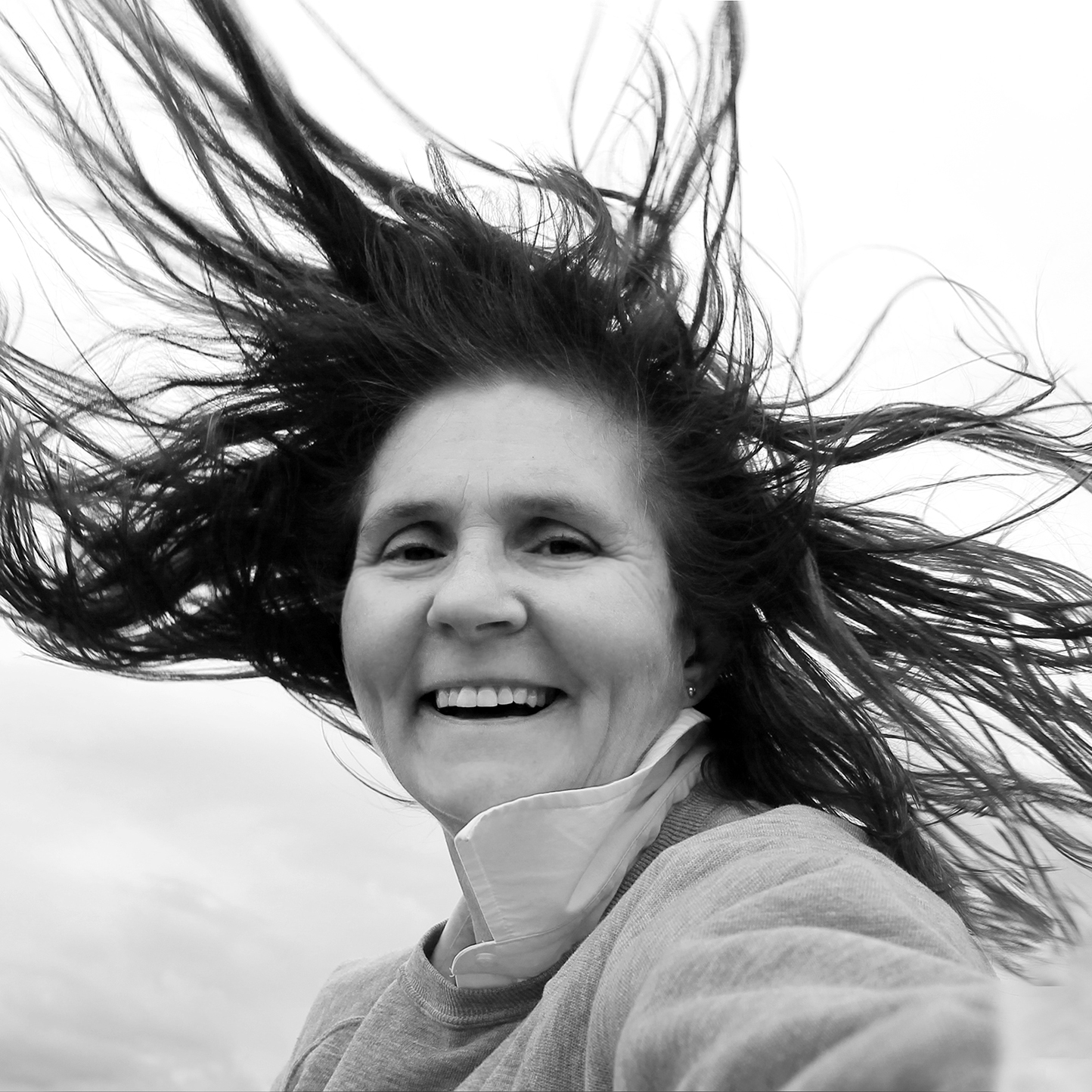
Rhona Blaker is a community college English instructor who has twice served as a fellow in the UCLA EPIC/Mellon program that is dedicated to providing inclusive classrooms for all students. She holds an MFA in Critical Studies from the California Institute of the Arts and has had work published in Southland Alibi, West/WORD 6, Trepan 5 and Scotland’s Stories. Her villain name is Khaleesi Crawford.