I remember how I first discovered that the people closest to you will hurt you: I was sitting on the tattered rug in our pink clapboard house, painted only on three sides, which my mother insisted looked like a Monet when glimpsed from the road. That small pink house floated atop a hill in the middle of Iowa, a pastoral scene so long as you didn’t discover the other side of the house that we never got around to painting. While my memory of childhood is typically as fuzzy as an impressionist’s rendering, this moment I recall in vivid detail—how I learned of our tragedy, and I might as well tell you it’s the moment everything changed.
Since we didn’t have cable television out there on the outskirts, I became an avid purveyor of the local stations. Childhood was filled with a mix of General Hospital, Maury, Cops, and Unsolved Mysteries. On humid, listless summer days my cousins and I would whittle away the hours in front of the boxset in the attic. Once they were gone, I would continue watching into night. Dead flies piled up in the corners of the attic. We’d gather dustpans full of them. I never understood where they came from, but now I am certain that the windows weren’t sealed properly. The outside always wriggles in. The crunch of a fly’s body, mounds of iridescent veined wings. Why were there so many? I have never witnessed flies fatter and louder than those hatched during wet Iowa summers.
Fat flies buzzed, the air conditioner sputtered, and as the television hummed, I remained glued to the screen while crushing Mountain Dew cans and popping Pringles. As a kid this was like heaven. My favorite show, of course, was Unsolved Mysteries. Robert Stack’s deep, ominous voice and the soundtrack’s haunting synths kindled some deep longing, wistfulness, and even fear in me. Entranced by the stories each episode wove, I remember thinking that someday I might solve my own mystery when the telephone number appeared on screen, cajoling viewers to call if they had a vital clue or any information that could lead to something bigger, like cracking open a case.
Sitting on the living room’s tattered rug playing jacks with my dad, it dawned on me. We were chatting about going over to my grandparents’ house, but what happened next, I will never forget. It was like a lightning bolt, a flash of realization. It occurred that I had never heard my dad talk about his grandparents before, though I was so close with my own. They were like my second parents and took on responsibilities that others might not because my parents were not only young and busy working, but broke. I asked with real curiosity, “Dad, who’s your grandpa?” I was eight years old. My father blinked, stunned, and froze with an open mouth as if he didn’t know what to say. I don’t think he ever contemplated having to explain.
“Well…he was murdered,” he offered.
I think I gasped. “Who murdered him?” I asked.
He paused again, trying to find the words. Finally, he relinquished, “It’s an unsolved mystery.” We both seemed satisfied enough with that answer, but it never sat right with me.
My paternal great-grandfather Henry died twenty years before my father was born. As I write this, I have already outlived him. For most of my life I have been captivated by the story in the same way I was glued to the television whenever Unsolved Mysteries came on and have sought to find answers ever since. The plot keeps revealing secrets the further I dig. The intention fueling my desire is threefold: to bring the story to the light of day so it’s not forgotten, to interrogate the dark underside of Midwestern Americana and the rural working-class experience, and to study the lasting impact of violence and hiraeth——long grief——on a family from a personal, intimate perspective. This is, in the end, a story about intergenerational trauma. It’s also about the danger of the outside lurking inside our walls, like a fly wriggling through a crack in the window. Those dark and violent impulses are never outside of us but lying dormant until thunder starts and the rain falls hard.
Unsolved Mysteries first aired on NBC in 1987 and was one of the original groundbreaking true crime television shows, followed by America’s Most Wanted on Fox a year later. Before that, the show Wanted ran on CBS for the span of a few months between 1955 and 1956. Wanted was a documentary series portraying active criminal cases to help locate fugitives. Uniquely, the show didn’t elicit actors but rather had real people involved, such as witnesses and police officers, reenact the events they experienced. Before Wanted aired, CBS explained that its cameras “will pick up the trail of wanted lawbreakers and the inside, relentless tracking down of authorities——clue by clue, witness by witness, hideout by hideout. Blended with this graphic realism will be a depiction of the fugitives’ background, environment, crime motivations, social relationships and records.”1 The show’s comprehensive approach not only to the crime’s events but to the complex relations surrounding it, in tandem with suspenseful narration, provided a lead for later shows like Unsolved Mysteries to follow. Brick by brick, it seems this short-lived program helped lay the foundation for the true crime explosion in America decades later.
It often goes unquestioned that the information or images depicted in these shows are true, or as close to the truth as possible. Yet one of the true crime genre’s key critiques is the way in which it’s prone to sensationalism or exploitation. Curiously ahead of its time, Wanted was “as concerned with victims of crime as with criminals themselves,” and the show’s productor and narrator, Walter McGraw, contended that “[t]here’s a lot of misunderstanding and glamorizing of crime.”2 This is similarly the tension I’ve faced in investigating my great-grandfather’s murder and its aftermath; how to keep a steady focus on facts without exploiting my own family history.
In my interpretation, the true in true crime is multilayered. While it calls to mind the depiction of real events, below the surface it implicitly foregrounds the way the genre so often shields its fictionalization by breaking down the fourth wall, by breaking out of its mediated representations to point to something real. Unsolved Mysteries and Wanted brought the viewer into an active role as investigator by breaking the fourth wall: the direct address to the viewer that maybe they could help solve a crime stepped out of the fictional world of reenactment and into the real. The problem, however, is that television isn’t real. As Gray Cavender and Lisa Bond-Maupin write, “such blending of fact and fiction represents a defining characteristic of reality programming inasmuch as these programs are intended to draw the audience into their reality through active participation.”3 The true in true crime highlights its indexicality; its signs point to and signify something that happened “out there” in the real world, but by attempting to step out of its frame, the genre tends to overlook the fact of fictionalization inherent in any storytelling. This is also a way of saying I’ve never known how to tell my family’s story.

I am a teenager sitting on the floral couch in my grandparents’ living room, and my grandpa pulls out the family album of photographs and newspaper articles. “Here’s the one about the slaying,” he says coolly, because he was always cool and composed about the matter, at least on the surface. The newspaper’s headline reads WEST BRANCH MAN SLAIN; WIFE SOUGHT. “But you know, everyone thought it was her uncle that did it,” he relays matter-of-factly. My dad is vying to hog the view of the album as my grandpa points to each image and article and debriefs us all, until my mother says, “You’ve already seen this before. Let the girls see.” Now there is enough space for my sister and I to soak in the inherited memories as if they are our own.
Suddenly the curtain pulls, and we go backstage. We go further back through the curtain’s egress and into the dark room of memory. Looking through a loophole in the dark room, an image of a white clapboard farmhouse fades into focus. For a moment, everything is quiet despite the rain. The image slowly zooms into a windowpane. Through a cut in the mesh screen, the camera floats into the home and we are now tracking high above the scene near the ceiling to find two children sleeping in a room. Moving from one room to the next, we track to the master bedroom where we find a man face down in bed as the white sheets bloom with warm blood.
A woman, shotgun in hand, rips open the door to her children’s room. She grabs them and throws them out of bed, ushering them out of the house and into the car in their pajamas. Terrified and bewildered, the two boys file into the car’s backseat reluctantly as they watch her throw the shotgun into the water tank and frantically start the ignition, her hands shaking, fiddling the keys. It’s the middle of a downpour. The rains have come like an omen. She peels out of the driveway and pulls the wheel erratically from side to side and the car whiplashes across asphalt. As the tires begin to slip, the car slides into a ditch by a field. Without hesitation the woman jumps into the muddy ditch, opens the back door and yells at the kids. The youngest is crying and won’t budge. He lets out a shriek. She runs away and disappears somewhere along that road.
I want to tell you this and much more: how many days I’ve spent weeping in bed watching Unsolved Mysteries in acrid-smelling shirts and unwashed sheets. I want to tell you about my preoccupation with failure. I want to tell you how I replay the same old stories and speak with the dead. I know, I know. The more you speak with the dead, the lonelier it gets. You learn a secret here and there, but don’t we all have them? I don’t think the dead are as much interested in secrets as they are revelations, which is another way of saying they are interested in truth, which is still yet another way of saying that they are preoccupied with justice.
I am not a detective nor private investigator, much less a judge, but having zapped minutes of my own life studying revenge, deep in the blood I think I know what justice is and what it isn’t.
The truth is that after I am gone, they are gone forever. What does it mean when a family no longer has a future? I want to tell you. This is exactly what I want to tell you.
Viewed from the road, our plot of land looked like any other quaint, cottage-style homestead. We’d see photographers with long lenses snapping stills from the roadside before getting back into their car and driving elsewhere. This was the kind of broken asphalt traveled by those looking for a scenic route. What they didn’t see was the fourth wall hidden from view, bare and unpainted. Maybe it was best for onlookers to make-believe an entire life residing within that home’s walls, a country lifestyle with a cornfed, hard-working, hard-loving family. But the fairytale would soon be dispelled if one got close enough to see. Then, most people would just laugh: “Never got around to painting that, I guess!” they’d say. No, we didn’t have time. We were too busy. Working-class life is a life of struggle and survival—the part that’s hidden from view. In Iowa there’s always a part of the house that’s hidden.
While I can offer an approximation of the events surrounding my family’s tragedy, as gathered from numerous sources——newspaper articles, court documents, gossip, rumors, and lore——I will never quite grasp the event horizon and what happened that day as the rains came suddenly and she fled. Our smoking gun won’t be solved, but the dead have other plans. Their roots continue branching and turning without notice. They both whisper and call for whisperers who will listen with an ear to the ground, so to speak. There are multiplicities of tunnels and root systems below the landscape, half-conscious, that one must follow, and death, decay, and collapse are inevitable offshoots. The prairie grasses murmur: we’re still here. We remember.
Now I am trying to break down that fourth wall, the one from memory with all its paint flecking off, chip by chip, clue by clue. Maybe you too can help solve a mystery——the mystery of where we come from. It is a productive question because it is always subject to being rewritten, even reenacted. It is a productive question because it gives us insight into who we are and where we are going, but before I go, I must permit myself to jot down this tale. Nobody’s ever granted permission to tell it. I’ve had to stake claim to this existence by vocalizing it even when nobody’s listening. But if you are: stay tuned for next time. Where we come from is truly a question that never ends.
Notes
1.Leichter, Jerry, editor. “NEWS – POSSIBILITIES – COMMENT.” Ross Reports on Television, vol. 7, no. 37A, 1955, pp. 2. Internet Archive, https://archive.org/details/rossreportstele53ross/mode/2up. ↩
2. Mercer, Charles. “New TV Crime Series Has Penetrating Look.” Lansing State Journal, 7 November 1955, p. 9. Newspapers.com, https://www.newspapers.com/image/207079701/?match=1&terms=Wanted%20↩
3. McGraw. Cavender, Gray, and Lisa Bond-Maupin. “Fear and Loathing on Reality Television: An Analysis of ‘America’s Most Wanted’ and ‘Unsolved Mysteries.’” Sociological Inquiry, vol. 63, no. 3, pp. 305-317. sci-hub, https://scihub.se/https://doi.org/10.1111/j.1475682X.1993.tb00311.x.↩
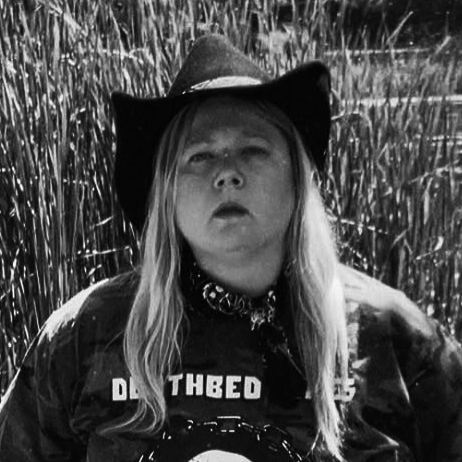
From a rural, working-class background, Julia Madsen grew up on a gravel road and earned an MFA in Literary Arts from Brown University and a PhD from the University of Denver. She’s currently working on an essay collection about family history and the Heartland. Follow her over at Gothic Quill’s Substack, where she explores the dark threads and lore that pull her back home. A purveyor of blood and grit, her favorite historical rivalry is the Hatfield-McCoy feud.