I never believed in ghosts until I met Advik. An amateur ghosthunter—that’s what he called himself—he would sneak out of the hostel room we shared every Saturday night to explore haunted places. His blog on local paranormal sightings had started to gather a cult following, and in 2010, blogs were all the rage——the internet still a luxury for most. When he convinced me to tag along on these escapades, little did I know what we were walking into, what we would be running from for the rest of our lives.
In the sprawling confines of Assam Valley School, Advik and I filled our days with ghost stories, mystical tales, dark lore, cursed places, black magic, witchcraft, spirits of the dead. Somewhere between long afternoons spent smoking weed on the hills bordering the school, evenings cycling through expansive tea gardens, and nights kissing on the grounds of the cemetery, we fell in love. But only one of us said it out loud.
Until I met him, I hadn’t even watched a horror movie. It wasn’t that I was scared——okay, maybe a little——but more than that, I was superstitious. I grew up in an orthodox Hindu family, and knowingly inviting ghosts into your house was a big no. Bite me for not wanting to summon demons and evil spirits into my life.
But Advik injected my veins with fresh horror everyday——newspaper clippings of freak occurrences, discoveries of new haunted places, dark web marketplaces you could buy cursed movies from. It wasn’t until that wretched, cold December night——Advik and I on one of our routine strolls——that everything changed.
My memory of what happened that night is clear as day. Deserted road. Raining. Advik and I out on a walk, about to cross to the other side. A motorbike cruising along the highway, barely a few yards from us. Stopped by a woman in a white saree. Long, luscious hair covering most of her face. She asks for a ride and sits on the passenger seat. Off goes the bike, passing us in a flash. We thought that was the end of it. Seconds later, gut-wrenching screams ring in the empty, cold air. The bike still visible ahead of us, the woman’s nails digging into the back of the man’s neck, blood gushing out of him like a fountain. The bike crashes. The woman turns around to look at us. Strong gust of wind blows her hair and reveals her face——a grisly canvas of shiny, maroon striped scars. She twists her head to her right, the cracking of bones echoing around us. She grins, her blood-stained teeth glistening, and disappears in a flash.
We turned white. In the moonlight, Advik looked paler than any ghost I had ever seen in a movie. I don’t know who broke the silence, or how long it lasted, but when Advik took off screaming, I ran for my life. Panting and tearing through the forest that divides the school campus and the highway, we reached our hostel room, locked the door behind us, locked away the memory forever.
I spent every waking day trying to erase that memory, erase that woman’s horrifying face. But no amount of gaslighting has worked, my attempts skewed in no small part by how many nights her face has haunted me. Fifteen years later, she still lurks over my bed——same wretched grin—mocking at what I have become. It was never the same after that. The ghost hunting stopped. Late-night walks became early morning jogs. Advik not only stopped posting on his blog but wiped it off the internet forever. And we never spoke about it again. Once school ended, we stopped talking altogether.
So, when he calls me all these years later, I slap my face twice to make sure I am not dreaming. His voice sounds the same——soft, deep, occasional cracks—only the cracks aren’t occasional anymore, like a chain-smoker who has been setting his lungs on fire for years.
He tells me his sister’s passed away. I provide meaningless consolation in the form of shallow cliches. I’m so sorry, Advik. What happened? Don’t worry, Mira is in a better place now. But why is he calling me? He didn’t call me when he got married, when his mother passed away from terminal lung cancer, not even when his father killed himself or when his business went down in flames. I got to know all of it by stalking his Facebook. Then why now?
But when he asks me in the voice of a broken man if I could come see him, I get my things in order instead of questioning, ready to make my way to his colonial bungalow deep in the confines of a tea estate in Tezpur. To see the man that I have loved and loathed for an eternity.

When I pull up my yellowing Alto in front of the bungalow after a rocky ride that had me wanting to turn around at least six times, my first reaction is what the fuck. Not in a good way. Expecting a sprawling, enchanting structure glistening in white that would rub on my face our differences in lifestyles and where we stand in society, the house is adorned by excessive antiquity instead.
The paint has worn off almost completely, exposing individual stones underneath, and whatever remains, bears the oppression of years of neglect——the once pristine white a dirty yellow now. Like my car. The lawn is lined with unruly weeds. A rotten smell hangs in the air. Despite that, the house stands tall and steady, refusing to succumb to the crumbling conditions around it.
My eyes shift to the pond at the corner of the decaying garden, where Advik and I spent long summer holidays reading sappy romance novels and kissing. The clear blue water has turned a sickly green, the sight of fishes swimming briskly replaced by fungi spreading. It looks like a victim of human abandonment as much as natural factors.
When I walk to the edge of the pond and lean forward, I see a distorted reflection. Drowning in nostalgia, the days spent here comes to me in flashes and hazy montages, my mind unhinged in its pursuit of the happiest days of my life. This is where I first kissed a boy, where I received my first blowjob, where we got caught making out and was sent packing to my family who spent the next few years beating the gay out of me.
As my vision becomes cloudy, a towering figure appears behind me, reflecting on the pond. The heat of breathing down my neck makes me shudder. I almost trip over and fall into the water, a hand grabbing me from behind and pulling me back. I turn to look at Advik.
It’s baffling how I recognize him despite bearing little resemblance to the bright, beautiful boy I remember him as. We are both thirty-three. But he looks frail, old, beaten——like his fortunes have turned unfortunate. He falls into me, I wrap my hand around him, and we hold each other for a long time. Once we break off, he looks at me. Thank you for coming, he almost says, but offers a cigarette instead, and we light up the quickly dimming winter night sky bright orange.
Did Advik catch a terminal illness? Did the stress of failing a business get to him? Losing his entire family catch up with him? Maybe his sister’s death delivered the final nail in the coffin? Or did he time travel to the future? Questions swarm my head like a flock of flies, but nothing devours me quite like the question of why he invited me here, why he wants to see me after all these years——years of painful, forced separation.
“I apologize for the condition of the house,” Advik says, entering the room with a glass of water. “I am the only one looking after it, and you know I’m not the best at keeping things clean and organized.”
“I remember,” I say, coughing for the hundredth time since I took the first drag, my throat itching in agony.
Advik nods, smiling weakly, a hint of shame planted over his face. For the two years we were roommates, I would always be the one cleaning around. He hands me the glass of cold water, his fingers leaving marks on the fog that has appeared around it. It’s only when I gulp the water in one long breath that my coughs disappear. I quit smoking six years back. But Advik has this knack of getting me to do things I thought I didn’t do anymore.
“How was the drive?”
“Good.”
I lie, keeping the empty glass on his study desk, scratches and carvings all over its wooden body.
From the window overlooking the front of the house, a gush of crisp air blasts on my face, my light blue shirt fluttering like the wings of a bluebird. Advik walks by me, leaning forward to pull the curtains. His hair, just shy of shoulder-length, flies everywhere, landing on my face. I don’t lean back or walk away, closing my eyes and taking in the familiar smell——sweet vanilla, fresh lemons, sandalwood. Every Sunday after Advik would walk in after a shower, hair dripping wet, and unwrap the towel around his head—this exact, intoxicating combination of aromas would hit me, slowly taking over the entire room.
No, no, no, wake up. You are not doing this again.
I get out of Advik’s way, standing a few feet behind as he blocks the breeze from entering the room. Without even looking at his face, I can see it changing color. Does he feel it too?
“What have you been up to these days?” he says, turning around.
“Can we just skip to why I am here please?” I say, closing my eyes in reflex.
My skin winces, every single hair on my arms rising. But I can’t be the desperate one-sided friend-lover-fool again. Can’t make him feel like I have infinite patience anymore. I have already proved that I have no life, running here at the drop of a solitary phone call after a decade and a half of pin-drop silence. “Can I at least interest you in dinner? Some homemade gahori bhat?” Advik says, and I immediately smell the fragrant concoction of garlic, ginger and onions sizzling in mustard oil, smoke and warmth enveloping our hostel room during lazy winter afternoons.
After dinner, after eating way too much fatty pork——delicious fatty pork cooked in a sauté of tomatoes and green chilies——I take a walk around the central hallway. Despite years of negligence, the architecture of the house is exactly the way I remember it, every corner and crevice embedded with memories. It’s like returning to a childhood home, except it’s not mine.
Many things are intact——the elegant crown moldings and wainscoting, wooden staircases leading to the floor above and below, the enormous fireplace in the center of the house, and big rooms separated by wooden walls with oil paintings of people straight out of history textbooks.
Just as I climb down the steps to rest in my designated bedroom, a golden-framed painting of a woman steals my attention. She looks familiar, and strikingly strange at the same time. Like someone I ran into at a party many years back and I can’t quite place now. She wears a white saree, her luxurious hair falling and touching the ground, tiny neck carrying a ruby necklace. Her cherry red lips and cheeks make her look young, but her eyes are tired and gray, like they have aged on their own without telling the rest of her body.
I am so fixated on her features that I don’t even notice the background—dark, navy sky illuminated mildly by a yellow glow bleeding into the woman from behind. Nothing else is visible. Portrait of the White Woman on Fire is inscribed on the frame, the painting marked 11/1829.
I have finished unpacking, ready to retire for the night on the same queen-sized bed I used to sneak Advik in once his parents were conked out. Even though I know sleep will elude me like love has all these years, I’m mildly annoyed at a knock on the door. Advik leans against the doorframe, shaking a red and white cigarette packet in my face.
“Fancy a post-dinner smoke?”
Grabbing my off-white Kashmiri shawl and wrapping it around my shoulders, I close the door behind me. We take a stroll around the garden, the lack of human noise and the shrieks of foxes and owls gripping the freezing night in an eerie embrace. Advik’s slow steps stop in front of the lake, and he pulls out two of the longest cigarettes I have seen in my life.
“My cousin brother visited me from the States last month. This is what they smoke over there.”
Marlboro, big black letters proclaim on the pack.
“No Charminar’s?” I say. Advik smirks, lighting my cigarette before his. “At least your manners are still the same.”
“Like old times,” he says.
On a particularly miserable night during our school days, my heart broken for the first time by a girl, sobbing like a wimp over her like I had lost something invaluable, Advik shoved a Charminar cigarette in my mouth. I coughed the night away, but as he pointed out the next morning, wasn’t it better than crying the night away?
Since then, I started bumming a few drags from him every night after a stomach full of terrible dinner at the dining hall, letting the nicotine soothe and poison my body. It wasn’t long until I needed my own cigarette, and soon, I was extinguishing a pack a day. Six years back, stumbling across a wedding announcement of my first and only girlfriend on Facebook, I decided it was time to quit smoking. But standing here in his presence, the air filled with his sweet scent, breathing the same air as him, I let Advik take me right back to those smoke-filled nights.
“I have started seeing her again, Ro,” Advik says, breaking the silence. “My bad…I hope you don’t mind me calling you Ro. Habit.”
He doesn’t pause for me, like he’s talking to himself, like I’m not even here. For as long as I remember, he’s called me Ro, as if he knew from the moment that we met we would have special names for each other. I hate it when people shorten my name, but when Advik says it, it sounds like a short burst of music.
“I’ve been seeing her for a week now. Since the night Mira passed away. First in my dreams, then in between my sleeping and waking moments, and last night, right there by the window.”
He points to the oval-framed window of the old guest room at the farthest left of the bungalow, most of it hidden in a thicket of hollong trees.
“Who?”
“The woman in the white saree.”
“What woman in——oh,” I say, hands on mouth, the all-too familiar dread rising from the smoke of that buried night. “I——I don’t want to talk about her.”
“You think I want to? But all I see is her face——white and spotless and deformed and inhuman.”
“White and spotless? What are you talking about? She had these scars all over her face, remember? And her face wasn’t exactly white, it was——”
“I don’t know what to do. I’m losing my mind.”
“Maybe it’s the trauma from losing your sister, Advik. Weren’t Mira and you close?”
“Not in the last couple of years, no.”
“Wait, is that why you called me?”
“I don’t know,” Advik says, throwing his still-lit cigarette to the ground, stomping on it and lighting another one. He doesn’t offer me one this time.
“That’s a pretty shitty reason to remember someone,” I say, blowing out a hefty cloud of smoke as the first drop of dew splatters on my head, then another, then a few more.
“I didn’t know who else to call. You are the only one who would understand.”
“So, I can——what——reassure you that she isn’t real, and that night never happened, and we never happened, and everything’s going to be fine?”
“I don’t——that’s not what I meant.”
“Then what? You remember me after an eternity and not because you missed me, not because you wanted to see me, but because no one else would believe that we saw a crazy woman kill a man. Oh wait, we don’t even know if it was a woman or a ghost or if any of that was even real.”
“Come on, you know it was,” Advik says, turning to me, smoke seeping into my nostrils.
“I don’t fucking know what’s real and what’s not anymore. I have spent the last decade and a half trying to erase that memory and I almost did, only for you to throw this at me.”
“I’m sorry,” Advik says, his voice barely audible. “I shouldn’t have called you. I wasn’t expecting you to turn up.”
“Fuck off. Really? That’s what you’re going to tell me now?”
“I——I’m sorry. I didn’t know who else to call.”
“How about your wife?”
My tone might have betrayed the amount of nonchalance I want my words to carry, but I stand my ground and stare straight into his eyes, not looking away until he does.
“She’s——we are——it’s complicated,” Advik says. “And I did miss you. I have missed you for years. I have missed you more and more these last few months. When Mira passed away, I——” He stops, voice cracking and quivering. “I realized I had no one else to talk to, no one to confide in anymore. It broke me.”
“I’m sorry, Advik. That you lost your sister. And your father. And mother. Trust me, I don’t say that lightly. But I don’t believe you one bit that you thought of me. That you missed me. I don’t believe it one bit.”
Pulling my shawl over my head to avoid the dewdrops, I walk away from Advik.
“If you hate me so much, why did you even come?”
His voice carries over to the front entrance of the bungalow.
“I don’t hate you, Advik. You know I can never hate you.”
We spend the next evening in Advik’s room, unspeaking, the silence absorbed by Ghulam Ali’s haunting ghazals——making their way out of the half-open door, wind howling, the silk drapes fluttering maniacally. Advik calls me to his study table, pointing to an enormous, red book——the binding in tatters. The History of the Colonial House, it says in gold emblazoned letters. By Henry Evans.
“What’s this?”
“Some sort of archival book. Found it a few months back while sifting through old stuff in the storage room. I was seeing if there was anything that could have been valuable to my father after he——you know.”
“Did this belong to him?”
“Yeah. It’s pages and pages of records,” he flips through the book, dust flying everywhere, “about this house and the town. Daily proceedings, economics, customs, architecture. From what I could make out. The ink is fading. But on the last page, there’s this weird thing.”
Wretched hands of youth, you drained her blood
Scattered ashes remain
This house will burn down. Just like she did
She will return. For lost blood. Your blood
You will go up in flames.
I freeze in place, grappling with the vehemence and lust for vengeance dripping from the words on the ageing yellow pages. It’s only when I turn the book and notice a date at the back cover——11/1829——that I freak out, standing up.
“You feel it too, right?” Advik says, getting up as well, shaking his head, my reaction confirming a terrible thought already implanted in his mind. “I think something terrible is going to happen in this house.”
“We don’t know that, Advik.”
“Come on, Ro. My mother died a week after doctors told us she was cancer-free, my father who never showed any signs of weakness hung himself in his room in this very house, my brother-in-law disappeared under mysterious circumstances and now my sister is dead. I am next. That’s the only reasonable explanation.”
“Hey, don’t say that. It’s just a stupid poem, okay? The guy writing these archival records probably got bored and wanted to show off his poetic skills.”
Advik doesn’t say anything, but looks deep into my eyes, like he doesn’t believe me. Unexpectedly, he leans forward to kiss me, but I move away before his lips touch mine.
“I’m sorry, I’m sorry,” he says, burying his head on my chest.
As much as I try to find the words to comfort him, the date 11/1829 keeps circling my head. Where have I seen it before? Why am I fixating on it? Why am I freaking out about it?
“The painting.”
“Huh?” Advik says, rubbing his eyes.
“The one at the end of the hallway. The woman in the white saree,” I say.
“What about it?”
I hold Advik’s hand, dragging him out of the room into the hallway, stopping right in front of the gigantic, gold-framed painting. The woman looks paler, still a marriage between youthfulness and untimely deterioration. But the sky looks brighter, more cobalt blue than navy.
“Look at the date,” I say, pointing to the bottom right corner.
“11/1829. So?”
“It’s the same date inscribed on the back of the book.”
“What book? Oh shit!” Advik says, his face changing colors——cheeks crimson, eyes big and red, lips quivering. “Oh god, no, no. It can’t be.”
“What?”
“That’s her,” he says.
“Who?”
“The poem.”
“What? The poem that you——”
“Wretched hands of youth, you drained her blood,” Advik says, like he knows it by heart. “Scattered ashes remain. This house will burn down. Just like she did.”
“You remember the whole thing?”
“She,” he says, walking closer to the painting, “is her.”
He taps the protective glass of the painting——once, twice.
ulping, I stare at Advik, then at the woman in the painting. One of her eyelids is staring right at me while the other is crooked, like she’s looking at something else, terrified to take her eyes off it completely.
Unable to sleep the second night in a row, I step out of my room. Trying to decide between taking a walk in the garden, waking up Advik, or getting in my car and driving away, I climb the stairs and grab a glass of water from the kitchen instead. I have just passed through the hallway when I stop in front of the woman’s painting.
Everything is pitch-black around me, the only source of light in the hallway coming from an old bulb hanging above delicately, swaying ever so little. But in the darkness, I see the painting clearer than ever. The sky is almost sapphire now, the background drenched in sunshine. It’s only when I lean in close and my nose is touching the glass that I notice something I never noticed before.
Behind the woman is a thick cloud of smoke flying into and merging with the sky. It looks like it’s coming from a pyre that’s just been set ablaze or is burning out. The woman looks sadder than I remember——lips pursed in a miserable smile, like she has accepted whatever painful conclusion her life is going to take.
I touch her face, my fingers tracing the glass that separates her from me. Her face is covered with scars, her pale skin a canvas of maroon and black stripes. Wait, how did I not notice this before? Am I fucking dreaming? Are my nightmares back again?
Wake up, wake the fuck up. I slap my cheeks hard, over and over, until my skin starts to burn.
Laughter echoes in the hallway——behind me, in front of me, all around. It’s only when I turn my attention to the painting that I realize it’s her. The white woman in the painting. Her lips open slowly, revealing crooked teeth——every inch covered in blood. She looks ill, sick——whatever of her youth had remained sucked dry——the disease taking over. She stares at me, right at me, and it hits me. This is the woman I saw that night fifteen years back. The woman who has continued to haunt my dreams with unwavering loyalty. This is her. When she leans her head to the right, it all comes back to me like a can of worms spilled on my head. With the crack of her neck, she opens her entire mouth, blood dripping, tongue sticking out, exposing these words: EVIL A DENRUB. Then, she screams. I scream along, falling to the ground, but all I hear is a shrill ringing in my ears.
I don’t know how much time passed between my screams and Advik’s, but when I hear him shouting my name, I get up and run into his arms.
“It’s okay, it’s okay,” he says with the same tenor as someone who knows it’s not.
“She, she, she’s the woman we saw that night,” I say, pointing at the painting but looking away.
“There’s no way, Ro,” Advik says, repeating it like a mantra, walking from one end of his room to the other.
My heartbeat refuses to slow down, pounding like it’s on the precipice of a cardiac rupture. “Who are you trying to convince? Me? Or you?”
“I——I know for a fact——”
“Fuck facts, Advik. What I just saw, what we saw fifteen years ago——there’s no facts to back it up.”
“When will it stop chasing us?” Advik says, punching his forehead.
“Maybe when we stop running.”
“What if she catches up to us?”
“I don’t know, Advik. I don’t know,” I say, burying my face in my hands.
“What are you whispering?”
“Huh?”
“I thought I heard something.”
“What? It’s nothing. Just a weird phrase that appeared in the painting. I don’t even know if I saw it or not. EVIL A DENRUB. Doesn’t make any fucking sense.” Advik looks at me, mouth open, eyes so big they look like two golf balls with black spots on them. Hands on head, he leans against the window, then bangs his forehead against the glass.
“Advik, what is it?” I say, pulling him back.
Lighting up a cigarette, he shakes his head. His hand shivers, ash dropping to the floor. Bending down, he starts opening drawer after drawer of his study desk, slamming each with increasing force. Finally, he pulls out a piece of paper and hands it to me.
“This is page 666,” he says.
Nothing peculiar jumps out as my eyes travel top to bottom of the page until I notice that the last line is a shade darker, like it has been written over many times.
EVIL A DENRUB, it reads.
“What the fuck? Evil A Denrub? What the hell does that mean?”
Advik doesn’t answer me, pulling out a blank sheet of paper from the top drawer. Holding his cigarette between his lips, he picks up a pen and asks me to read the letters one by one.
“E, V, I——Why are you writing in reverse?”
“Keep going, will you?” he says.
Instead of writing left to right, Advik does the opposite——as if he’s writing Urdu. When he’s done, he holds the sheet before me. “Burned A Live.”
“Burned alive,” he says.
“Who was burned alive?”
“The woman in the painting.”
“Who is she? And why is her painting in this house? And why didn’t you show me this page before?”
“I thought it was cursed, okay? It probably still is. After what’s been happening in this house, in my life over the last year, spare me if I have become slightly superstitious. When nothing makes sense anymore, you have to believe in something that you never believed in before.”
“But who is she? What’s her connection to this house?”
“Apparently, she was the first female officer for the East India Company,” Advik says. “Was super well respected and all. But a group of young men, unable to deal with,” he changes his voice to a trebly falsetto, “how a woman can hold a higher position than me——burned her in broad daylight.”
“Fuck.”
“The British Raj didn’t want the truth to get out in the fear it might cause panic among the locals and portray their people as primitive. Which is funny cause that’s what they considered our people. So, they told everyone instead that she immolated herself on her husband’s funeral pyre. And mind you——this was right before sati was banned.”
“How do you know this?”
“My father used to tell me these stories as a kid,” Advik says, choking on his words. “They sent the murderers back to England. The wretched hands of youth! Wiped out the truth completely. Wiped out her name. Made their completely fabricated story part of the official records. English bastards—that’s what they do to their own people.”
I nod, letting him take charge.
“Only one person could have known the truth.”
“Who?”
“Henry Evans.”
“Who——oh, the guy who wrote that book?”
Advik smirks, shaking his head lightly. “He killed himself six days after the woman’s death. That’s what the records say. But there was a belief that the British empire killed and buried him to make sure no traces of the white woman in the white saree possibly remained. But a friend of Henry Evans——I don’t remember his name——was commissioned to paint the woman before her death. People had only heard about the painting. It was burned along with her. But a few years back, it mysteriously turned up at the ALCA. No trace of it being burned or anything.”
“ALCA?”
“Art Loss Collectors Association. The world’s largest private collection of stolen art, antiques and collectables.”
“But how is it here now? I don’t remember it being in the house when we were in school.”
“My father went to university with the chairman of ALCA. He spent his life savings to procure it. Which is why the house looks like this now,” Advik says, waving his hands around.
I know he means well——like a lot of rich people do——but compared to this bungalow, mine is a straight-out slum house.
“I don’t understand. Why the fuck would your father spend a fortune on this painting?”
“When people become obsessed, it makes them do crazy things. When he found Henry Evans’ book at an auction, he became obsessed with the story of the man behind the words. He saw a lot of himself in Henry Evans. He spent his entire life trying to figure out the truth. Only if he was here to find out that Henry Evans confirmed his doubts that the woman in the white saree was indeed burned alive, only if he was——”
Advik’s voice breaks mid-sentence, and so does he. I snatch his cigarette and stub it on the ashtray. His hand stays in the air, like he’s still holding the cigarette, and it’s only when I take them in mine that he breaks out of the spell. My heart latches onto his, matching the rhythm of his sobbing throbs.
“It’s okay, Advik. It’ s okay,” I say.
No one tells you how difficult it is to find the words to fill the devastating silence of moments like these. When Advik composes himself, sniffles reducing in volume and frequency, our hearts slow down together.
“He believed that the woman was buried in our backyard. Which means her remains are still here,” he says, voice low and gentle.
“That’s freaky,” I say, every strand of hair on my body rising. I steal glances in the direction of the backyard, an uneasy feeling grabbing hold of my chest, crawling up my neck.
“Everything about this house is. We need to get out of here. We need to get the hell out of here.”
“We will, we will.”
“I’m not afraid to die——maybe a little. But I can’t let anything happen to you,” he says, eyes peering into mine. “Let’s get out of here. Now. This cursed house has taken enough from me.”
“Listen,” I say, cupping his face. “Tomorrow is Mira’s last rites. Once that’s over, you and I can both get the hell out of here. Forever. I will be here with you until then, okay?”
He nods. I lean in and kiss him softly. I want him to know I mean it. His body trembles into mine, like we have caught electricity between us.
In the backyard, Mira’s last rites are underway. I haven’t seen her since she was a kid, and now she’s a long white cloth lying on a bamboo bier——not a person, not a sister——just a body, a dead one. Advik, in a white dhoti with his bony torso exposed, lights his sister on fire. Tears dripping down his cheeks, he proceeds to sprinkle holy water on her like she’s dirty.
Twenty-odd people are in attendance, clad in white. I don’t recognize any of them. As Mira’s body splits and cracks, grey smoke from the funeral pyre clogs my throat. Cheeks hot, melting, eyes barely open, burning, burning, burning.
“Where is her husband?” a man behind me says.
“Who knows? Do you see his wife?” a woman says.
“No. Like they all disappeared into thin ar.”
“So suspicious.”
“I’ll tell you what’s even more suspicious. Third death in three months.”
“That we know of.”
“She was so young and healthy. And he was the only one left in the family.”
Even when someone dies, people won’t stop demeaning them. If that isn’t evidence enough that human beings are the most despicable species, I don’t know what is. I want to turn around and spit right on their faces and drag them to Advik and make them repeat the ugly words they just spewed. But a scene is the last thing Advik needs right now.
Sanskrit verses shouted by the priest drown out the ugly conversation, repeated promptly in a chorus of uncoordinated voices. There’s no way that could be true, right? Advik and a murderer? Sure, the way his family died is strange. And sure, Mira’s husband’s disappearance is strange. And Advik’s wife not being here is strange. But there’s no way.
Suddenly, the bamboo bier starts to shake. Fucking hell, I am hallucinating again. Fuck this. I need to see a doctor. Why the fuck did I not leave last night when I had the chance?
As the smoke envelopes the air and makes everything invisible, a loud crack has everyone gasping. Once the smoke spreads evenly, it becomes clear that the bamboo bier has fallen apart. Not only that, but Mira’s white-clad body has vanished. An unnerving lull looms in the air. My eyes search for Advik. But he’s nowhere to be seen.
A ghastly scream echoes in the distance, sending shivers down my bones. A woman, half-burnt, cinders of fire falling from her long hair, recognizable only from the torn fragments of white cloth that remain, charges away from the crowd.
My body freezes. A few people run after her, but she outruns everyone. It’s only when she reaches the pond that I notice who she’s after——Advik. He jumps into the pond, and she jumps right behind him, digging her nails onto his back as they both disappear into the green water. Liquid red surfaces shortly, and in no time, the entire pond is crimson.
I stay rooted to the ground, unable to move my legs, like someone’s holding me captive from underground. When a choir of horrified screams close in on me, I turn around, walking as fast as I can. Then I run for my life.
Pushing against the sweaty crowd. Immovable statues. Maybe I should puke on their fucking shirts. Hot, like keeping your face close to a pressure cooker. And then relief. Gentle breeze. The crowd behind me now.
I run, away from the house, out of the tea estate, onto the highway and oncoming traffic, leaving my car behind, leaving Mira’s burning body behind, leaving Advik behind. Rain starts pouring in full force, a thunderstorm hanging over my head ominously, and all I can think about is the sweet implant of Advik’s lips on mine. I can never kiss him again.
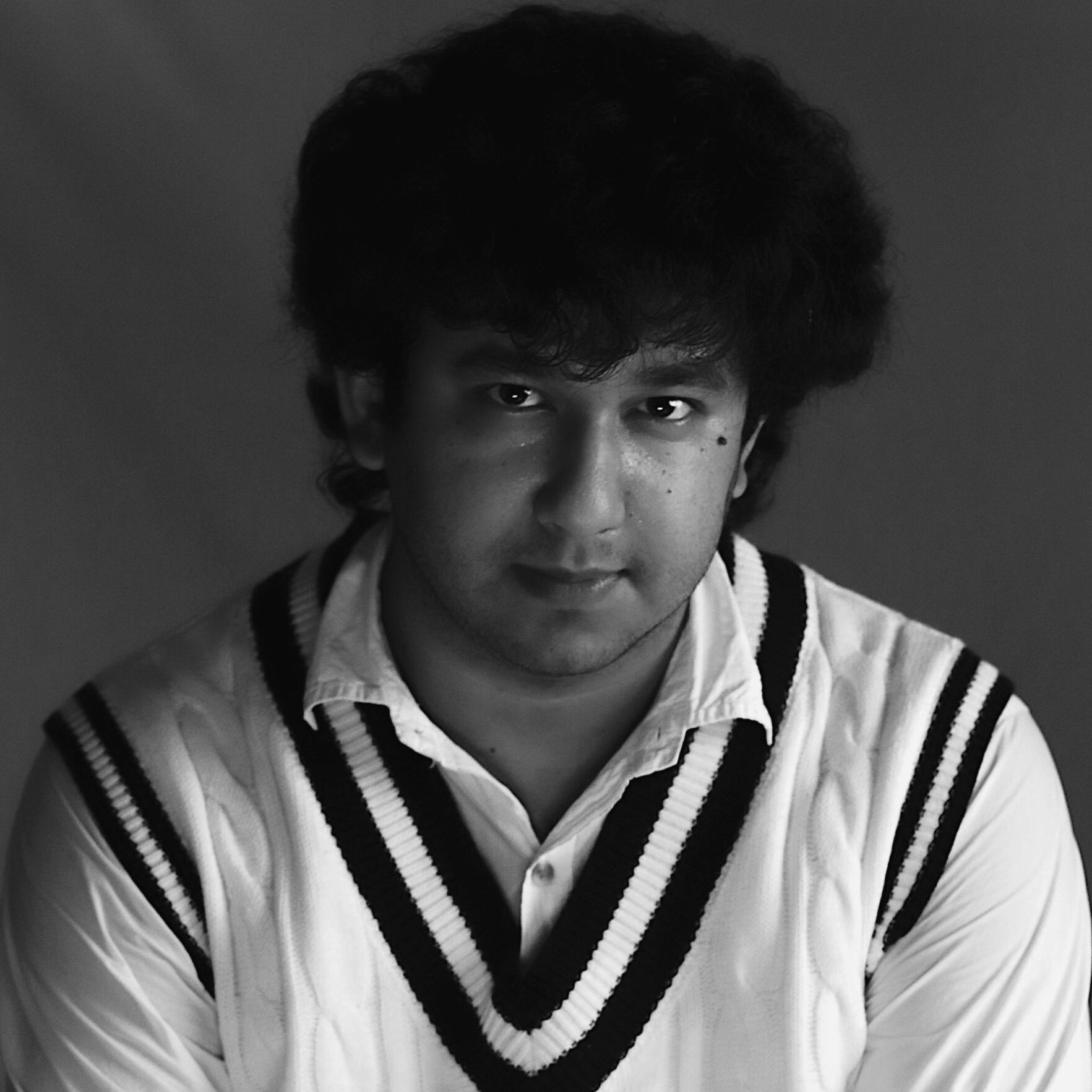
Priyanuj Mazumdar is a writer, editor, educator, and musician from northeast India whose work has appeared inthe Los Angeles Review, Allium, BULL, Harbor Review, Roi Fainéant Press, and elsewhere. Recipient of the Nadine B. Andreas Endowment for 2025-26, he was shortlisted for the Leopold Bloom Prize for Innovative Narration and featured in RUNT Magazine’s Young Creatives series. His short story was featured in HellBound Books’ Anthology of Extreme Horror. He is the Senior Fiction Editor at JMWW and Prose Reader at The Adroit Journal. Find more on his website http://priyanujmazumdar.com/ and his socials @whoispriyanuj. His favorite revenge story in recent memory is from the psychological thriller television series You. The reason the revenge plot of Bronte against Joe works so well is in its meticulous detailing, unpredictability of execution, Bronte’s fluctuating feelings towards Joe throughout the season, and the revenge vindicating multiple women’s deaths. His favorite historical feud/battle is Sepoy Mutiny, the infamous uprising of Indians against British rule in 1857. In the aftermath of Hindu and Muslim soldiers having to forgo their religious beliefs by being forced to use beef/pig fat for cartridges, this rebellion proved to be a cornerstone for uniting Indians and gaining independence from the British Raj.