We lived in Queens, New York.
My brother Michael was accepting. As a child you could set him down and he would remain where he was placed.
I lasted two hours in nursery school, a week in kindergarten, and moved up to first grade just after my fourth birthday. At first, my mother had to sit across the hall in an empty classroom, or I would get up and walk out of school when the teacher turned her back on the class.
It didn’t get better.
I had chronic sinus problems that today could be cured with a common prescription. There were other, less obvious, physical challenges I had to overcome. Back then, after the conflict in Korea, I was out of school three or four days a month, which limited my participating in most sports, the binding culture of my world.
I found solace and safety turning inward, watching, observing, making mental notes of everything and everyone. I became an expert and tried to understand, a voyeur of the world that finally found sanctuary in the small summer home we owned in Otis Ridge, in the untouched Berkshires of 1955 western Massachusetts. A simple two-bedroom home on three overgrown acres bordering a quiet lake on one side and a cemetery across the infrequently used rural road on the other.
My father drove up from the city every weekend during the summer. I was too young to understand the stress constant travel put on him, and in hindsight, no grasp of my parents’ already fragile marriage.
I once came into the kitchen, a snake in hand, and at five years old proudly presented it to my mother for approval.
“Honey, we’re going to have lunch soon,” she said. “Please take your friend outside and put him back where you found him.”
I wasn’t disappointed, because my mother smiled with affection no matter what she said or her response to a crisis, and later found out it was a harmless green garden snake when my father drove up that weekend.
Every Friday when my father appeared, I would rush to his side, while Michael was quick to withhold his affection. As we grew, the divide between Michael and I deepened, and he gradually took advantage of me in small, biting ways.
My favorite pajamas had a small tear in the seat that one day was the length of my forearm. He would tell me before we fell asleep that “everyone in school says you’re strange. They keep asking me, but I say nothing,” as though being a big brother gave him some special access to my parents or immunity from punishment for slights of cruelty.
We fished and camped out, and as we grew, my father slowly introduced us to the magic of guns. I was fascinated with how such a tiny piece of lead could shoot out of a metal tube and take down deer and fox and every sort of animal.
“Never load the rifle unless you are going to use it, and never, never point it at anyone, loaded or not,” was the mantra we heard as he trusted us with spent rounds for months until he felt we were ready for a greater responsibility.
When I was about eight, the ritual became reality. Every weekend we each got a box of .22 caliber cartridges and competed in target practice on logs, tin cans, and other detritus set high on the large outdoor, stone fireplace down by the lake that hadn’t seen a fire in years.
We could fire them under his strict supervision as rapidly as we pleased over the weekend or as slowly as we wanted. I used my ration in the breech loading Remington .22 caliber rifle over two intense, affirming sessions. Michael fired away until his box was empty in less than fifteen minutes.
I was in the fourth grade. Michael, two years older, was in the fifth. The older we got, the more teachers and friends compared us, the more pointed Michael’s ridicule became. When my parents chastened Michael he became more bitter and resentful.
At the end of that school year, we piled into our car and made the three-hour trip, the last hour on back roads and country trails. I had grown to love the small summer house and less of the city life. I felt at home. Surrounded by the freedom of nature, I would go on long walks, exploring the woods, fascinated by the cemetery, and often, found an unfired rifle or shotgun round. Inadvertently I started collecting cartridges under my father’s watchful eye.
My mother understood that I had self-imposed boundaries which I bumped up against with unsettling regularity, but my discipline held, and her concern rarely reached fear.
My father watched us shoot, while my mother watched how carefully and thoughtfully, I handled the weapon, the cartridges, and deciphered the idea of the explosive mix as though I was getting to understand a friend.
Understanding wasn’t anything you got a grade for; it was all personal.
I had watched Westerns and gangster movies on television and was fascinated with what guns could do. I felt at home with the old breechloader in my hands. And the more the rifle welcomed me back, the better shot I became; and the better I became, the more I understood about friendship.
When we arrived that weekend, my father told us it was going to be our last summer there. He was going to sell the summer home, our summer home and escape from the oblivion of the rest of the world. He didn’t explain why, and I had not the authority to ask. I was about to lose an irreplaceable part of me. The news was threatening. Michael hardly noticed.
I had taken an IQ test weeks before that fatal weekend, and when the mail arrived with the results, my mother looked disappointed and said, “This can’t be right,” and called my teacher. I read the letter while she was on the phone——a hundred and thirty-six.
By then, I was absent and at home with greater regularity, but with exceptional grades the school rarely complained.
I didn’t respond immediately at the score but as she left my bedroom, I mentioned that I was tired.
She paused, worked through the implication, then looked relieved. The next day she called my teacher.
“He was sick all the week before that test and on medication the day before the test,” she detailed her conversation with my teacher days later.
Medications in the 1950s, only a decade after World War II, were almost primitive. No computers, the side effects of many medications were like killing a fly with a hammer.
The next week I took the test with the few students who were out sick that week. When I finished, I started to doodle on the back of the test form, which infuriated the proctor who sent me packing to the principal’s office for the remaining minutes of the test.
“Better,” my mother said when the second letter arrived, and Michael made it his job to read. She never mentioned the score, and I never bothered to ask. The relief on her face was enough.
Years passed before I mentioned the incident. She was not surprised because I never mentioned the score. In tears, she suspected Michael had taken it, possibly to refute the evidence one brother was smarter than the other.
That following weekend in the Berkshires may have been the worst of my life.
Michael’s taunting on the drive up was nonstop to the point where my father threatened to return to the city if he didn’t behave.
“What’s the capital of the Ukraine,” he asked, fumbling over the pronunciation.
“What’s the capital of the United States?” I answered.
When we passed the two-and-a-half-hour mark, the scenery thickened and what remained of country civilization all but disappeared. The road narrowed until we came to the cemetery at the crest of a hill on our right, and my real home on the left.
“Were you looking for this?” Michael said as we drove up and he removed his sweaty hand from his jacket pocket, which held the crushed remains of my favorite British metal toy soldier. That hero cost me dearly in trades with one of our neighbor’s kids. I looked down at the destroyed figure. His head was missing. “I accidentally stepped on it.”
My father understood the darkness of Michael’s bitterness and purposely held off giving him his box of cartridges on Saturday, letting me fire half my rounds that sunless afternoon. I twice split a pencil in half at fifty feet. Michael had never come close, and his reaction to our parents’ delight, only made my success unbearable.
I had practiced on the drive up that weekend: imagined holding the rifle with a firm grasp, taking the target into the center of my sights, my index finger on the trigger, pausing with a deep breath and gently squeezing off one of my precious rounds. The more I practiced, the more I envisioned striking at the heart of everything that caught my eye.
I was happy to have split the pencils, but just like the IQ test, what I achieved didn’t quite register with me. I had been cold to my own successes for as long as I could remember, and uncomfortable with the recognition it brought.
The next day I fired the balance of my box. Michael took his turn and fired away with his usual abandon, racing through his box of fifty cartridges.
“That’s it for me,” he said, handing the rifle back to my father.
I stood back and waited. I had seen that expression before. Michael, sullen and distant, was up to something.
“You shot last, so you clean it,” my father said as a reproach.
My father never let anyone clean the old Remington. He took pride and wanted us to learn how to shoot, but more importantly how to respect shooting and guns in general. Michael couldn’t look my father in the eye. He didn’t like the job he was given. He’d grown to resent much of what he was told to do.
“You think you’re pretty smart, don’t you?” Michael said after my father left us and went inside.
“I think smart should be enough.”
“Too smart for your britches, are you?”
“You going to clean the rifle or talk?”
“I think I can do better,” he said, producing a live cartridge from his pocket.
“You fired 49? I should have counted.”
“They didn’t teach you how to count in school? You’re so smart I thought you would know how to count to fifty,” Michael said with eerie composure.
“You hate me that much,” I said, noticing both parents slowly opening the screen door a dozen yards or so behind Michael.
It usually creaked open, but today it was as silent as my brother was menacing.
Michael opened the breech, slipped in the cartridge, locked the breech shut, stepped back, and pointed the rifle at me.
I never considered myself particularly brave, but I instantly reacted in the only way I could and closed the gap between us until the muzzle of the rifle was pressing up against my heart.
“Even you can’t miss from this distance.”
Michael’s eyes exploded in anger. Confronted and threatened, he probably expected me to scream for help or run away. Neither entered my mind.
“Enough,” my father barked as Michael turned and swung the rifle sideways and yanked back on the trigger.
There was a faint crack followed by an acrid metallic smell, though nothing like the recoil or gun smoke from firing an ordinary .22 caliber round. My father bolted across the lawn and ripped the rifle from my brother’s hands.
“Your mother found the cartridge in your pants, and I removed the gunpowder and put back the bullet and left the firing cap.” My father opened the breech. A faint puff of innocent smoke belched out from behind the dislodged bullet and its detached brass casing.
“I…”
That was all my brother got out when my father grabbed his arm, marched him back to our house, and threw him on his bed. There was no dinner that night, and we returned to Queens early Monday with my father.
My only companion during that dark, silent drive back to Queens was what remained of my British soldier.
Michael was transferred to another school. We spoke little of what had happened in the coming months and distancing years, and not at all after he turned twenty-one and went out on his own.
The last we knew through a friend was that Michael was working in a food processing plant in Kansas. When I heard this, the only thing that came to mind was, “Kiev.”
My defiance surprised my parents. It surprised me too. But it didn’t feel alien.
I had come to resent Michael, his growling sullenness, his incessant whistling as though he could conjure magic from the air, how he imposed himself in every conversation in school until no one wanted to be around him, and thinking all the week before my father’s heartbreaking announcement of holding back a cartridge myself.
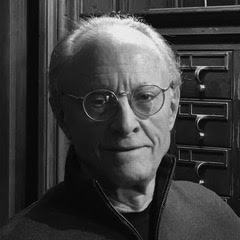
Arthur Davis is a retired Wall Street trained management consultant. He has been quoted in The New York Times and in Crain’s New York Business, taught at The New School and interviewed on New York TV News Channel 1. He has advised The New York City Taxi & Limousine Commission, the Department of Homeland Security, Senator John McCain’s investigating committee on boxing reform, and testified as an expert witness before the New York State Commission on Corruption in Boxing. His work has been published in numerous journals. He was featured in a single author collection, nominated for a Pushcart Prize, received the 2018 Write Well Award for excellence in short fiction and, twice nominated, received Honorable Mention in The Best American Mystery Stories 2017. More at www.talesofourtime.com, Amazon Author Central and the Poets & Writers Organization. His favorite revenge story is The Godfather.