It’s Wednesday night, the lights are dimmed. Maggie is sitting close to me on the couch in the basement. She is so close. If it were in my power, I could lean over and kiss her. But I’m not able and so lean forward instead and begin mixing cocktails with the bottles we’ve set on the table. “Make mine small,” Maggie says.
“Oh, you’re no fun,” I say and fill her glass to its brim, a bit of Diet Coke and a whole lot of vodka.
“Stop,” she insists and slaps my arm. “We have like seven episodes to get through. You’re going to get me wasted.”
“Even better,” I tell her.

The man bursts through the door with an amicable valiance that assures us we are both safe and soon to learn of a sexual victory or a seedling romance. He is muscular but lean and made boyish by a too-large button down, pale green, and by the crystal blue eyes his shirt offsets. We call him Dan, not because this is his name but because the name, like his visual aura, is one we don’t encounter often, one that conveys winsomeness and general stupidity.
“Guys,” Dan says, “guess what?”
“What?” says Amanda with ironic expectancy, one fist to a hip, a wooden spoon in that hand. She is among those beautiful, busty girls, who, despite their intelligence, fell for Dan’s eyes for a while. Because you are not always with us, you may not understand this dynamic, but you should know how often Dan bursts into the apartment with new stories of romance and sexual conquest. It’s endless——and we think Amanda still loves him.
“I found the girl I’m going to marry.” Dan’s hands thrust out, fingers splayed. Women are Dan’s version of fish stories.
“Haven’t I heard this before?” asks Amanda. She gives up the ironic pose and goes back to airily stirring. “Oh yeah. With Jessica.”
“Well——”
“Oh, and Lisa.”
“But——”
“And Amy and Angie. And me.”
“Yeah, I know,” Dan insists, “but this is different. None of them meant anything.”
Amanda leans over the pot so her cleavage is easy to see. “Excuse me.” She stands up straight again and holds her spoon at him. Nothing drips from it.
“You know what I mean.” Dan leans his head back and raises his hands in a gesture of innocence.
“Uh-huh.” Maggie chimes in from beside me on the sofa.
“So what’s this woman’s name?” Amanda says to redirect. She returns to her stirring and watches Dan with a smugness that pains us. We want to call out to Dan. We think, Oh Dan, at least know her name.
But he doesn’t. “That’s not the point,” he tells us. “I still love her.”
Maggie and I should be the intrepid love story. But we’ve failed. We’re otherwise pretty cliché. We’ve known each other since we were kids. Our parents were next door neighbors and played in the same card club Saturday nights.
It was one of those nights we almost made it. It was so close, it would have been a beginning if we had: the second scene in a B-movie named for a four-chord love song. She was seven, and I was six. The Havershaws were ten, eleven. We were at Maggie’s house, and our parents were downstairs playing Euchre or poker, pinochle or canasta. I don’t really know what games they played because we kids had games of our own, they preoccupied us completely. In better weather we would stay outside, catching fireflies, watching the yellow glow spread on each other’s faces. Or else it was ghost-in-the-graveyard, in the spring and the fall and especially at the Havershaws’, whose lot abutted the state park and whose trees were twisted and eerie.
But when we came so nearly to loving one other, we were in Maggie Brown’s house. We were in Maggie’s bedroom. I can see the moment clearly, though I don’t know whether outside it was winter or raining. We were playing hide-and-seek with the Havershaw boys, David and Casey. Really only just Casey. David was hiding in a hallway corner, toying with instruments he’d made from supper’s garbage. He was a little funny, David, like Mark.
Casey was in the master bedroom with his face turned toward the wall as if he were staring intensely at a firefly in his palms. Or that was his assignment while Maggie and I crawled, silently as we were able, down the hall, past David, and into her room. There were only two rooms upstairs with a half bath between them. Hers was dark then and smelled of the saccharine strawberry perfumes made for little girls. She was seven. I was six. I hid beneath her bed, and she clambered in beside me. For a child, she was glorious. I was lying sideways, she on her back. A dimpled arm pressed into my fat stomach. From downstairs we heard the soft din of adult laughter, from the hall David beating pop cans, Casey calling, “Three. Two. One.”
Dan works at Smithy’s Pizza, down the street from the apartment building where he and Amanda live. Several other friends stay in the place above Smithy’s and gather there with an almost daily frequency. Maggie claims that financially and calorically this is unreasonable. I smile but add no comment. An irony we avoid talking about is that, though she is studying nutrition in her fifth year of college, she put on the freshman fifteen, then the sophomore thirty, and, thanks to type one diabetes, hasn’t since regained her childhood loveliness.
I, on the other hand, have thinned out since that evening beneath the bed. That evening when a pretty, young Maggie giggled and kissed me, on the edge of my lips, which must have been scented with Sprite and pepperoni. I was shocked, even after David started screaming——as David was apt to do——even after Casey had quieted him and, after, found us. I was stiff as the floor while Maggie continued to kiss me. Stiff long after she left the bedroom to count us off again.
Dan saw the girl, “the Blossom Girl,” across from the pizza parlor. He says she was incredible, and we can see it: he is behind the counter tossing dough in that dramatic and unnecessary way he’s become so practiced at. A lovely but less stunning friend of hers enters first, then she, the Blossom Girl, walks through the door, and Dan’s heart is won. Her hair is black and layered. Her bangs hang in frivolous feathers across her forehead and face. Dan’s girl is in a cotton dress that holds tightly to her hips. There are suggestive, O’Keeffe-esque flowers sewn onto it, and though Dan isn’t the sort of man who considers how or why, he’s drawn in completely. He balls the dough in his hands and bites it.
“I hope you didn’t serve that,” Amanda interjects.
“What?” Dan asks and again gives the head lean of innocence. “Germs cook out in the oven.”
“Eww.”
More important to us is what draws Dan to these women. Maggie says it’s insecurity. I think it’s natural.
Like me, Dan used to be fat. A few seasons ago, we saw pictures of him as a teenager, pizza-faced and flabby. We laughed to think of that, this now beautiful man. We debated whether it could truly have been Dan, or if those were pictures of another child actor dog-eared to look vintage.
“Look at the eyes,” Maggie’d insisted. She pointed vigorously at the screen.
Maggie has always been the arbiter of good taste between us. While other kids clung to Beanie Babies, she favored a single Steiff Bear of her grandmother’s. She wore makeup in the third grade. By high school she had a collection of scarves, and, if she wore one, it rarely ever made it around her neck, but hung instead off her shoulders, casually. Maggie had sights set on Audrey Hepburn and the glamorous poster that allowed her that hope.
Before she left for college and I went off to State, there were only two things in Maggie’s life that weren’t motion-picture perfect: her friendship with me and her love for this sitcom we’re watching, Toppings. I imagine this is why she put the two of them together, back then, when we were both single and seniors in high school. Because, to be honest, I wasn’t that into the idea of sitcoms——though I was very into Maggie Brown. She knew it——I know. I never told her, but we are old friends, and old friends are true and never need to tell each other difficult things. The difficult things are simply understood.
Or maybe she didn’t know, or doesn’t. Maybe it is an irony that we avoid talking, and always have. Perhaps we are old friends because we have never told each other the difficult things. Yet she invited herself in, and I wanted her there. And I have her here now just the same.
If it was anyone’s job to articulate an issue, it was Maggie’s. Not Mine. And maybe that’s what she was doing, articulating. Not trying to say, Have hope, keep pining for me. Not saying, Hold out hope: now that you’ve lost weight and the zits have retreated, you have a chance. Not, I like your style, your mind, the essence of you. Not even, I want to fuck you, you filthy boy, like she did in my fantasies.
Maggie Brown was sitting in my basement, on my couch, curled up as far away from my body as she was able. Maggie Brown was articulating that, back when we were kids, I was cute. I had a chance. But now that we are older and self-aware, there are other issues to be considered.
During the commercial break, Dan went back to Smithy’s, where, as usual, he messes with dough and spreads toppings on a pizza we do not see. Meanwhile, presumably from his upstairs apartment, Mark emerges grumbling that his roommates, Cass and Jackson, who are dating, are “at it again.”
Don’t worry. It’s not that you haven’t seen the first six seasons. It’s that Cass and Jackson are a little mercurial——though completely in love. So “at it again” could mean that they are fighting, or that they are showing loud or otherwise overt signs of affection, or that their affection is loud and overt because they are having a particularly successful make-up session after a particularly nasty fight. I think this is unhealthy. Maggie thinks it’s tacky, but sweet nonetheless. She sees Cass and Jackson as a successful couple and hopes they’ll get married before the end of this, the final season.
Mark, whose lack of love interests throughout the series makes him conspicuous amidst his friends, is a good balance of earnest and comical. Most of the time he is silent, but when someone needs the honest and cliché elaborated for them, Mark is always ready to explain how other people should live and to make jokes in sad moments, so that other characters can be rueful, ponderous. “I tell you, Danny, I’m ready to move out,” says Mark.
Dan pulls a pizza from one of the large woodfire ovens and says, “What’s that?”
“I just feel like a third wheel up there.” Mark sits down on a counter stool and runs a hand through his thick black hair. The scene cuts briefly to a shot of Cass and Jackson. They are kissing against the island characters often stand around while in this apartment. Jackson starts to lift off Cass’s camisole, though the plaid overshirt that signifies her artsiness is still on. “Wait,” Cass demands.
“What?” asks Jackson, looking duly forlorn.
“We have to get a place of our own.” Cass puts one hand firmly on the island top.
“Why?” Jackson asks.
She does a little tricep push and lands seated on the island before beginning to take off the camisole, cross-armed. “So we can do this more often.”
“Yes.” he says. The scene cuts in that brief instant between a glimpse of Cass’s taut stomach——though she must now be forty——and the moment her arms tangle in the two shirts she’s wearing.
Back in the parlor, Mark explains, “I feel like I’m interrupting true love. We’ve been living together for a decade. It’s time for me to move on.”
Dan stops what he’s doing to lean over the counter and speak closely to Mark. “You’re like best friends with Jackson,” he says. “He’d tell you if they wanted you to move out.”
“We are best friends.” Mark leans even closer to Dan. “That’s why he can’t.”
The camera zooms in on Dan’s eyes. There is a look of understanding, then of shock. “Mark, I’ve got to go, man.” Dan runs out from behind the counter, tossing his Smithy’s apron behind him. We can’t see where it goes. But before the commercial, we get a quick shot of the girl, still wearing that flower print dress, getting into a cab that pulls away before Dan can say anything at all.
I was a late bloomer, while Maggie came early. I’ve already told you how pretty a girl she was. A regular Lindsay Lohan, the kind of child who is not exceptional at first glance but who registers on the minds of boys and men as on the way to a voluptuous womanhood.
I felt it. Witnessed it in the too-soon way she adopted her mother’s stride. In the way even our teachers looked at her when her breasts began to swell——she was only twelve, I think, because I remember her changes as early and graceful.
When I was thirteen, I was five-foot-two, a hundred seventy pounds. Throughout high school, I thinned down. I stayed a hundred seventy pounds, but my legs grew long, then my arms. Then my soft, bloated belly sucked into itself like I’d been hibernating my whole childhood and winter had finally gotten cold.
Forward girls at Friday night field parties started telling me how, now that my love handles were gone, I had gotten kinda pretty. Under the influence of Pabst Blue Ribbon and weed, I got up, with those small urgings, the courage to stumble into a few of them, put my lips in their direction, and, while most laughed me off, talking to whoever was nearest about how drunk I was, and fumbling, I kissed a few, the ones drunk enough themselves to kiss me back. They were always savage, average girls who needed love more than they needed me. On the dark sides of lean-tos, along patches of ill-lit forest, we would make out, awkwardly, with loud smacking sounds, pressed up against cold sheet metal or into the needled earth, and neck for blood.
I was then——I am now——less practiced at being attractive than Maggie Brown. In our high school days, Maggie had already had fifteen or sixteen years to master it. I, on the other hand, never got there, not exactly, never even had a chance at creating the illusion. So, just then, when I needed her most, I wasn’t good enough for Maggie Brown. She played volleyball and dated, on and off, until our senior year——I kid you not——the captain of the football team. It was an appearance if she came to a party for more than a few minutes. Her boyfriend was always so eager to drag her away, to whatever they did alone, to all the things I imagined them doing alone, and to those I imagined doing to her.
I didn’t have any extracurriculars and instead spent my time on homework, on masturbation, on Lovecraft and Stephen King, on community computer games I won’t mention by name because they may prejudice you against me. I want you to believe that there was something left of us, of our childhood friendship, of that kiss, a something that would not pass——and hasn’t. We could neither be in the same realm, nor can we be anything but bound together. She couldn’t ignore me in the hallways or skip an invitation to dinner with my family. I was always saying hi and inviting her over. I was always plotting to have Maggie Brown.
I’m not big on product placement, but when we watch Toppings, Maggie and I drink Skinny Girl and Diet Coke, on the rocks with a lime wedge. She calls them cute-a libres, I guess because that’s what she thinks she’ll be when she’s unpacked the pounds from playing beer pong and drinking high-octane rum and Cokes before an insulin shot. Or maybe that’s a joke big girls tell to convince themselves the taste of aspartame is worth it. For Maggie, I think it is, because she is only a few years from her beauty and might still have it again.
When the commercial break ends, a perplexed Mark is standing behind Dan, who is looking forlornly down the streets of Manhattan, we imagine, thinking of all the places a Manhattan cab might go. “Who was that?” Mark asks.
Dan’s face is still turned away from Mark and now also from the camera. He waits a moment then answers dramatically, “The Blossom Girl.”
“What?” Mark says. His hands are in his pockets. He leans to see Dan’s face as he might peer casually in on a construction site.
“The Blossom Girl,” Dan says. “My Blossom Girl,” voice in crescendo with a desperation unknown to his caprice. “That’s the girl I’m going to marry.” He’s shouting now and turns around to take Mark by both shoulders. “I have to find her. You have to help me.”
To be young and inadequate has made me a vindictive adult, if we are really adults now, Maggie Brown and I. I am twenty-three, she twenty-two. There were several thousand beautiful girls on the campus of Illinois State, and, though I wasn’t into the Greek scene like Maggie, I found a couple lovers.
My attractiveness is, at best, the kind that appeals to a few, so few I have always doubted the truth in their enthusiasm. I’ve appealed to smart girls, the shy, quiet ones. The ones, who sat in the first row in high school with sticks up their asses, the ones who sat in the back and chewed on the ends of their dyed black hair, who, in locker room talk, the boys all guessed had whips and chains on their bedposts. I loved, however briefly, two or three girls, who, like me, blossomed late, who didn’t think of themselves as pretty.
But they were, my girls, pretty: Sam, Anika, Janet. They were beautiful——fit for the movies. Not like Maggie Brown when she ruled my wet dreams, but good enough for the background. They were the kinds of pretty I didn’t have to be ashamed of. Janet, who I dated two years, Janet who wasn’t just practicing on me for some better equipped boyfriend, was even the kind of girl I could have written home about, though I never wrote home about anything.
I don’t know if I was holding out hope for Maggie Brown. Maybe I was because, after school and everything, though Janet said she wanted me to stay, I found reasons to leave eventually——or maybe she left me. I don’t know anymore, and now that I’m home, I am here again, alone on the couch, with Maggie Brown, in my basement.
There is only a brief pause in-scene, and when we return, Dan and Mark are getting into a taxi. “Follow that car,” Dan commands, because he has heard infinite other characters say this.
They drive by Times Square. Through the Holland Tunnel. They are trapped in a traffic jam, where Dan gets out because he sees the Blossom Girl’s hair in a taxi ahead. But when he opens the door and announces, “I’m so glad I found you,” the face in the passenger seat turns to him and is a man in drag. An old gag, worth a laugh: the pretty woman, the lovely man, that object between the lover and beloved which is as unnatural to the viewer as unintended by the love.
Then, while apologizing, Dan sees the hair again in the taxi beside this one. He runs to it, and this time opening the door reveals an old woman, head and shoulders swinging towards Dan with sorority sister vigor. Her voice is cracked; her face is as dramatic and drooping as a bulldog’s. “Hello,” she says in a high, witchlike tone.
“I’m sorry,” Dan says, still holding the door ajar.
“Don’t be sorry, honey,” the old woman says, and, calling back to the driver behind her, adds, “I told you this wig would do wonders for my love life.”
To the great dismay of the woman, Dan slams the door shut. He dashes up the lanes of cars, moving inch by inch. He opens door after door on women who scream, who yell like the car horns honking periodically around them, who use masculine and cartoonish methods to seduce Dan in the moment he stands before them, his eyes glinting beautifully blue in panic. Then, finally, one uses pepper spray——“It’s about time,” Maggie says——and Dan stumbles through the traffic, holding his eyes, and another, alarmed woman, doesn’t even wait for Dan to harass her, but opens her door and prods him with a taser. “Pervert,” she asserts and gets back in her cab.
A soft driving rhythm begins. Dan collapses in the middle of traffic. His eyes are striped as a raccoon’s, but red, bright red from the spray. We want to laugh, at the hyperbole, the beauty turned, but can’t, because Dan is convulsing with sobs. The camera pans the windows of every taxi ahead to show they are all carrying black-haired heads on to unknown destinations. Then it rises high into the air, the camera, and Dan is the centerpiece of its shot. In the music voices rise too, in three-part harmonies, crescendoing and falling in hope and lament. In the bottom right-hand corner of the screen, a small figure can be seen. It is Mark. He is calling out for Dan. “Dan. Dan,” he says, his voice loud, yet distant, for we are so high.
“Mark,” Dan calls back. “Forget it, man. It’s over.” And we are afraid, for, here, we are not used to being left irresolute and sad. Nor are we really. On the screen, the very earth rises up, in three-dimensional distortions, in order to resist. Down on the ground, amidst the world’s swelling, the dot that is Mark reaches the dot that is Dan, and they are the center of that world which promises, To Be Continued…
While the screen counts down the seconds to the next episode, I pour us each another drink. “It shows some dedication to take a shot to the face like that.”
There is a pause. “Excuse me,” she says and takes the glass I offer. She must think this is tasteless. She has to.
“The mace,” I say, smiling coyly. “It takes some dedication to get hit like that for someone you haven’t really met.”
Her face rises from the nose in distasteful animation. “It’s frightening. But it’s sweet. You’re sweet,” she says finally, setting her drink on the glass tabletop and sitting on the edge of the sofa so that her thigh is pressed tight against mine. It’s thick, her thigh. The excess of it is cut into by the hem of her shorts. She leans in then, as if to kiss me, and you aren’t surprised.
She hasn’t done this before, ever. But she is a bit drunk and vulnerable, and, of course, tomorrow she will be able to tell me how she had known all along I’d loved her. She will say that what happened was okay, because she had wanted it too. That we both had wanted it, but that this or that had come between us. She will say how she knows, now. We are old friends, remember, there is no need for explanation. We will know.
She will know. For I simply kiss her on the cheek, that soft, sallow cheek that used to hold so close to the bone. I want to love her, Maggie Brown, but I can’t. Something of it is gone. Her beauty yes, and, by it, my belief that I need not know more.
She slaps my arm, in a sort of playful, forgiving way, “Stop it,” she says.
“What?” I say.
“You know exactly what,” she says.
In the final episode, the Blossom Girl will return. Mark will bump into her on the subway, and he will desperately try to keep her from getting off. He’ll start by talking. Beneath her sight he’ll text message Dan. Dan will be trapped at the pizza parlor. Dan will look panicky. Dan will sweat.
A commercial break will begin. We will drink.
Meanwhile, Cass and Jackson will decide to elope. The Blossom Girl will get to her stop. Mark will tackle her and act like this is an accident. Dan will sweat. Cass and Jackson will get in a taxi and kiss passionately. They’ll talk about how excited they are, and all the things they’ll do when they’re married. Dan will sweat. It will be almost closing time. The Smithy’s Pizza clock, with a different topping to represent each hour, the one from the opening credits of every show, will tick. That clock will tick impossibly slow.
We will drink and drink.
The Blossom Girl will become uncomfortable with Mark, but will decide he’s harmless, even when he changes trains to follow her. Her comfort goes so far as to let him strike up a conversation.
Maggie will question the reality of this.
I’ll tell her, “Suspend your disbelief.”
Dan will sweat.
We will laugh with giddiness.
Dan will sweat.
The conversation between Mark and the Blossom Girl will become awkward. She will tell him to tell her the truth about what’s going on. Cass and Jackson will walk down the aisle to a mash-up of the Wedding March and the Toppings theme song.
Maggie will yell, “Fuck it.” She’ll start singing. A commercial will come on. She’ll stop.
The theme song to Toppings will play right before that place with the three rimshots, the part where the camera zooms in on the anchovy section of the clock, so you know the second hand is in time with the drum. But the theme song will be slowed to an almost unrecognizable bellow. Dan will sweat. The camera will flash between Dan and the clock: No tick. Sweat. No tock. Sweat.
The volume of a commercial will make my ears feel violated. We’ll both do a shot. Tipping my head back will make me want to vomit.
A homeless man will stand witness to the wedding. He will be in plaid and blue jeans and will make dramatic and suggestive faces at the portly church lady on the bride’s side of the aisle. Amanda——we will be wondering what has happened to her——will get on a subway train. The clock will tock the hour. The slow theme song will release to regular speed. Dan will cheer with excitement and throw the dough he is making moonily into the air. It will land on Mr. Smith, the owner, on what is left of his hair. We will know this, but Dan will look innocently for it while Mr. Smith stands with both fists to his hips. Bent over in his search, Dan will find Mr. Smith’s stomach and work his way up to his doughy head. Dan will lift it away from Mr. Smith’s face, only for Mr. Smith to say, “Glad you volunteered to work late, Danny.”
I will fixate intently on the bottle, so I don’t have to know if Maggie’s eyes are on me.
When Cass and Jackson reach that point of no return, just before the kiss, Cass will get honest. She will not want to get married without her friends. Neither will he.
But the big turn of events will be this: Mark and the Blossom Girl will arrive at Smithy’s. Dan will be morosely punching dough. The Blossom Girl will introduce herself. Her name will be Maggie, it always has been. He will grow ecstatic as she explains what Mark has told her——until she says she has already married her “The One.” She will talk about The Ones and how you don’t always know right away that you’ve found one. But The One, she will say, will come. Dan will thank her sadly.
Cass and Jackson will arrive to announce their wedding. There will be a celebration, for everyone except Dan. The lights will dim. All of Smithy’s will dance: Cass and Jackson, the homeless man and the old church lady, the Blossom Girl and, from somewhere, her husband, Mark and Mr. Smith——it will be so funny that they are different ages, not to mention that they are gay. And Dan will sit on a stool behind the counter, picking limply at some dough.
At that moment, Amanda will come in. She will come in into a glow of framing light from the city. That girl will be glorious. She and Dan will stare at each other. “I love you,” she will say.
“Man,” he’ll say, stupidly.
God, how we will laugh.
“Kiss me,” she will say. And he will. It will be long and sweet and intimate.
Then he’ll pull away to say, “I love you back.”
We will drink. We will drink long and deep, until the bottle is empty, and I will lean my head into the sofa and stare at her with full affection, leaning deeper and deeper into the sofa and her.
When the show is over, I close the computer so its blue light stops veiling us. Maggie with a thought not too dissimilar, I’d guess, stands up to turn the track lighting on behind the TV we’ve been casting to.
With a glow from the back, she silhouettes like a young Dolly Parton, her top one of those album covers my mother was always trying to imitate, all smile and breasts and haystack wig to the ceiling. You can’t see her smile, of course, or that her hair is brunette. There’s hardly any light between her legs down to the knees. The speckles of it, through her thighs and the pores of her nylon shorts, infer the smile and the rhinestone sequins in a taffeta dress, the kind of lonely twang I thought was stupid until Janet, my college girlfriend, and I played a live-action vampire game with friends——the kind where you dress up and act out the parts——and she and a buddy took the fantasy too far. Her blood and his sharp teeth out by the woods behind the upper-class dorms. Jolene, Jolene, Jolene, Jole-ene.
“I guess I better head home,” says Maggie and reaches for the hoodie she’d laid over the back of the reclining chair by the love seat.
“You probably shouldn’t drive,” I say.
“Probably not,” she says, “but I’m not driving.”
“Right,” I say. “You want a glass of water before I walk you home.”
“I’ll take the water,” she says. “You don’t need to walk me. I think I can make it 300 feet across the lawn.”
“It’s no trouble,” I tell her.
She’s halfway into the hoodie mumbling something like, “If you insist.”
In the kitchen, I pour both of us waters from the fridge door. Maggie leans over the island, elbows to soapstone, sipping hers, lost in thought and staring in my direction while I put down three glasses the way a frat boy chugs beer.
By the end of that third, I’m so swollen, I decide I can’t waste more time. I’m going to bust one way or the other “What’re you doing tomorrow?” I ask.
Maggie has to pull herself together a little. “Me?” She combs a hand through her hair, over the back of her scalp, “Nothing too early.” She takes another cautious sip before giving up on my asking her what I’m trying to ask. “You?” she says.
I ought to have an answer ready, but I don’t, so I fill my glass again, drink a little and come to match elbows with her, catty-cornered, across the island. “Nothing planned,” I say, “yet.” We spend another dumb minute before I decide on something an old man tried with me at a bar once. “I have an idea,” I tell her and lean angled at her face over the island top.
It’s almost always like this, in the end, isn’t it? Just going for lips and hips and hoping something happens. Most of the time it doesn’t. But most of the time you haven’t waited so long or been so hopeful. Most of the time, you’re standing face-to-face in front of someone’s door. Most of the time, time hasn’t changed it.
She kisses me, Maggie Brown, stiff, cold with vodka and surprise, but she doesn’t back away. I reach for her right breast with my left hand. She lets it happen. Then reach for the other with the other. She lets that happen too. The island is wide. I try slipping my fingers over her, down the curves of her sides, and, though I’m almost six feet now, I have to stand mostly on toes. My waist aches with the weight of my body. Maggie takes my left shoulder in her right hand, pushes me back to split up the kiss. I’m not ready for it. Not ready all. My whole torso falls, and, when I try to catch myself, my right arm drops into the sink and I ding my ear on the side of the faucet.
“Christ,” Maggie says. “Are you alright?”
“Fine,” I say, but haven’t thought about it. I’m backing away, holding my ear with the hand that hit the sink, testing its fingers against the side of my skull to see if any of them are jammed or broken.
“Are you sure?” Maggie asks. She’s backing up herself, high-toeing towards the dining room with a look I don’t have words to explain. She folds in on herself, a sort of failed hedgehog curl, her back too tense with nerves and a decade of holding her chest up.
“Listen,” she says. Nothing you want to hear ever begins with Listen. “I wish——”
And I will try to remember when, when Maggie was beautiful and thin. I will try to remember when Maggie was little and mine. To create a gap between that time and this, in which we can still be in love. But what faith in the world would shape it.
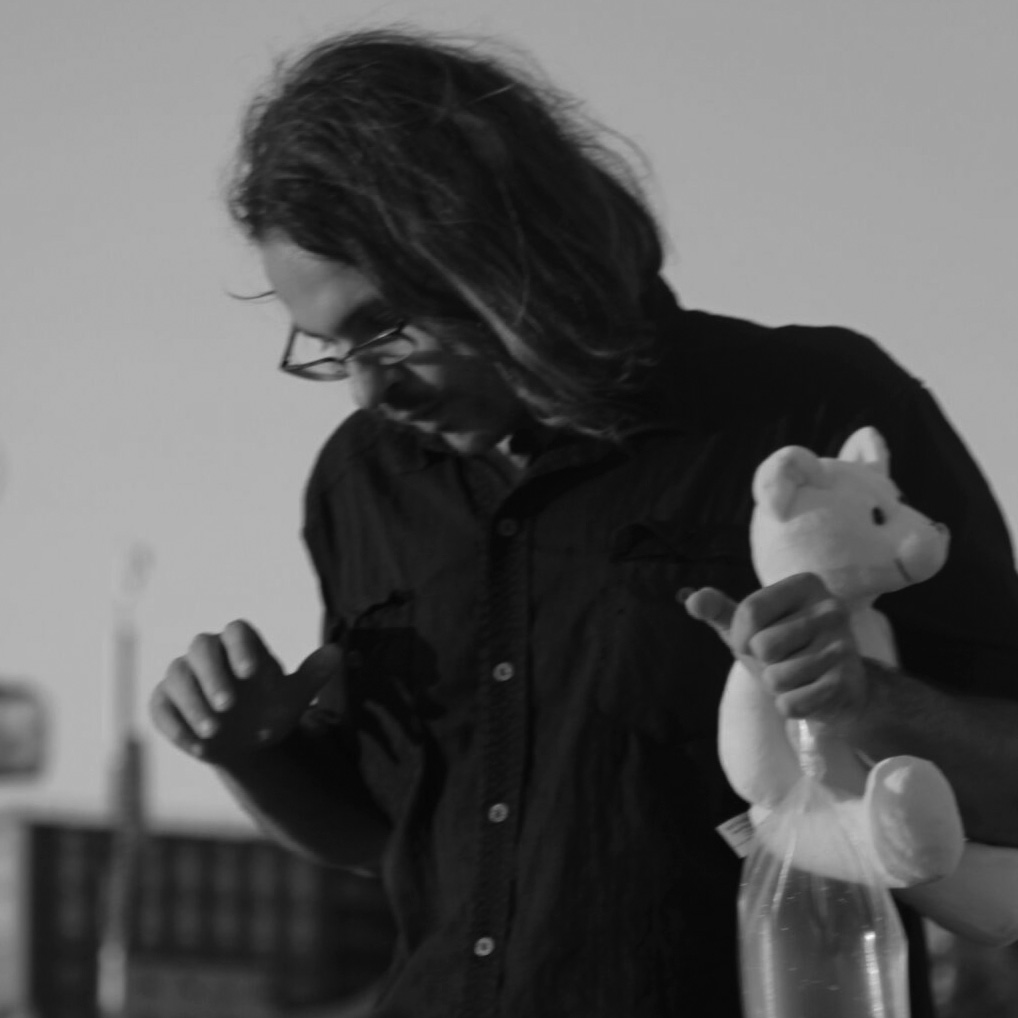
Adam al-Sirgany is an Arab-American writer born and raised in the Driftless Midwest. He is the Acquisitions and Developmental Editor at SFWP, an instructor at the UCLA Extension Program in Writing, Editing, and Publishing, the volunteer Executive Director of the non-profit 1-Week Critique. He was recently named the City of Rockford, Illinois’ Poet Laureate. His collection More Hell is out on Whiskey Tit Books. His favorite historic feud is between Salem Massachusetts’ Sheriff George Corwin and 81-year-old farmer Giles Corey, who, after two days of being crushed under stones to force a confession of witchcraft, refused to acquiesce, requesting, “More weight.”