In the Middle of a Better World is a queer guide to love and identity, a collection both formally inventive and infused with a bright, shimmering imagination. What do we risk by living our most authentic lives? More importantly, what do we gain? Part elegy, part battle cry, this highly anticipated new collection by Grant Chemidlin is unabashedly joyous in its exploration of desire, human connection, and community—those we’re born into and those we build ourselves.
This interview took place between February and April in 2026.

Charles Jensen: The book’s opening poem, placed before section I, is called “The Beginning of Love.” In it, the speaker and their object of desire walk together and, in a burst of magical realism, the beloved plucks a cloud from the sky “like cotton candy.” I think this poem is particularly smart as a framing device because it includes elements we’ll see throughout the book: continued use of surrealism and magical realism, the physical and emotional connection between two men, the idea that relationships are a journey, and so on. It’s a brief poem, one that maybe dissolves on the tongue as quickly and sweetly as cotton candy itself. When in your manuscript process was this poem written and how did it guide your completion of the manuscript?
Grant Chemidlin: “The Beginning of Love” was written very early on in the manuscript process. I think it’s actually one of the first poems I wrote for this book, or wrote before I even knew this was a book. I kind of always knew it would be the “proem”——the prologue poem——because it really highlights the complexity and duality of love, especially love at its earliest stages. The excitement and pining, but also, the fear. When we love, we simultaneously live with the knowledge that love ends, or at least, the possibility that love could end, and end very painfully. I think the duality speaks universally, but also, to me, speaks very specifically to queerness and queer love. The excitement and desire, the fear and anxiety, are heightened even more when we are pining from inside the closet or still learning to feel comfortable holding a lover’s hand so visibly in public.
What I also love about this poem, as you mentioned, is its sweetness and its magical realism. Part of the point of this book, to me, is to show readers that gay love, love between two men, can be, and is, full of magic.
CJ: Along with that sweetness in the love poems in the book, there is also a lot of red-light-district unabashed sexuality, too. Some of the poems recount the speaker’s past sexual liaisons that predate coming out, and of course continue on after. I’m curious about how you decided to include these poems in a book that seems on its face to be about love, marriage, and a special connection with one person.
GC: Being outwardly sexual, being unabashedly proud of my sexuality, was something I never allowed myself to feel as a closeted gay man afraid of society’s judgement. I think I included these more “risqué” poems in the collection because I wanted to be seen, finally, in that way. No fear. No shame.
As far as placing these poems in sequence with more “traditional” love poems———I think this book as a whole is me trying to figure out what queerness means to me, specifically, how I want to define it. Is queerness about sexual liberation, fluidity, open relationships, orgies? Yes. Is queerness also about monogamy, deep emotional connection, living a quiet, domestic life? Yes. Like everything else in the universe, queerness can hold many different definitions at once. It is complex and ever-changing as we move through history, time and space. Showcasing a range of queerness throughout the book, felt important to me, and felt true to my own understanding of it.
CJ: I felt that tension throughout the book as I read. We often speak of coming out as an event in the past tense: “I came out.” But coming out is so much more complex than one moment. I had a sense reading these poems that the speaker was wrapping up aspects of his coming out journey toward greater self-acceptance. The way this personal, internal journey intersects with the shared romantic journey here was really interesting to me. Can you talk a little bit about how you saw these themes working in the poems and in the book?
GC: I would say the emotional climax of this book is the speaker’s wedding (my wedding). It’s when the intersection of the personal and romantic journeys feels most potent. In real life, leading up to the wedding, I was of course incredibly excited, but also, very nervous. I kept picturing myself standing in front of hundreds of people, so completely visible, as I kissed a man and said “I do.” I surprised myself by feeling all those self-preservation tactics that are second nature to us when we are in the closet, the armor we are constantly wearing to avoid embarrassment and rejection. I realized, even after ten years of being out, I was still reaching a culmination of my own coming out journey. Our wedding was like the final level of a video game, and I had to vanquish the Big Boss of Shame in order to feel fully actualized as a gay man.
I think these journeys (the personal, the shared romantic) are so intertwined because, as humans, we learn to love ourselves by learning how to love others, and vice versa. The more I’ve allowed myself to love my husband, the more I’ve surrendered to it, the more I’ve grown to love who I am.
CJ: In terms of that shame and embarrassment that keeps the closet door shut, you sprinkled a sequence of poems through the collection titled “F A G,” The poems themselves use a technique perhaps inspired by or related to the Oulipo lipogram technique——the letters f, a, and g have been made invisible in the poems, though the blank spaces they should occupy remain, and you cleverly made sure these letters always appeared in this order (f, a, g) before starting over at f. Reading the first of these poems was really challenging for me, but I had the feeling that my struggle to “restore” the meaning in the words was part of the project of these poems. I’d love to hear about how you got this idea, how you crafted the poems, and how you see the sequence girding the whole collection.
GC: I can’t remember exactly how I came up with the idea of the FAG poems, but I remember it being around the time I read the book Skeletons by Deborah Landau. The book is comprised of acrostic poems, where the spine of each poem spells out the word SKELETON. I found the constraints of the form to be interesting, the need to pay such close attention to the letters, letting words be the guide first, rather than content.
The FAG poems are similar in that sense. I had to write letter by letter, always double checking I was keeping the order (f-a-g) throughout the lines. In this way, the form itself felt symbolic of the queer experience——how we carefully choose our words, how difficult it can feel to express ourselves through the constraints of heteronormative society.
After I finished writing each poem, then I’d white out all the f a and g letters. I felt like this brought the reader into the queer experience when encountering the poems: feeling confused, uncertain, trying to understand a story that isn’t readily available. My hope is that the reader is challenged, but over the course of the series, finds these poems to get easier and easier.
Overall, I’d say the FAG poems are scattered throughout the book to act as reminders of the residual shame we feel as queer people, even after coming out, even after getting married.
CJ: There’s a lot of formal experimentation in this book–long poems in sections, surprising line breaks, use of visual black bars, numbered lists, footnotes. The book overall is lyric in how it approaches storytelling, but the formal elements add an additional layer of meaning for me as a reader. Can you talk a bit about how you worked with form in this collection, and maybe some of the discoveries you had about form while writing the book?
GC: The speaker in these poems is figuring himself out. He’s experimenting, shapeshifting, piecing together the puzzle of his life. It feels right to me that the poems, too, contain that sense of experimentation; the different formal elements heightening the excitement, frustration, and wonder the speaker is feeling. I like when forms can do that——feel aligned with the content of the poem. While putting this book together, I had a realization about one form in particular: the sequence poem. It’s so queer, isn’t it? Telling a story in tiny pieces? A narrative that feels fractured, filled with gaps, yet somehow whole? There’s a long sequence poem in almost every section of this book. I think the form comes naturally to me, as a queer person. I’m used to that kind of storytelling: the restraint that conjures up imagination.
CJ: Those formal restraints, which can feel almost like physical guardrails as you’re writing, are in an interesting dialogue with emotional and narrative restraint in this collection. In a late poem, “Copyright,” you write, “Sometimes being out is another form of hiding,” as in continuing to hide information from the speaker’s parents. It’s interesting in a book that is so rooted in shedding lies to self and others that it agrees there are new lies that must be told even as the poem itself reveals the truth. Can you talk a little bit about what it means to be this brave on the page, and how the poems carry the burden of truth in a way real people can’t or won’t?
GC: I find it easier to express myself in poems than in real life. For me, a poem is like a message-in-a-bottle. I write it, I release it into the world, then hope it finds the people in my life, the people of my past, I’m trying to reach. I know this isn’t the most direct way of speaking. It would be much braver of me to say how I feel face-to-face with someone, but I think it’s better than saying nothing at all. I want a poem to be like a little door, a start to a conversation, or at least, the possibility of one.
I truly believe that what we practice in our writing manifests itself in our real lives. Yes, the speaker of my poems is bolder, more assured, more honest, but with each poem I write, I feel myself growing into that braver version. I feel myself more willing, as you say, to carry that burden of truth, to speak it.
CJ: I love how you characterize that distinction between yourself and the speaker——I have generally thought of the speaker——persona to be “a version of myself,” but I don’t know if I’ve ever imagined that speaker to be an aspirational or idealized version of self. And maybe that’s a good lead-in to a question I had about how this book contends with ideas of self, of being fully one’s self as a gay man, which I felt was a throughline in the collection. I think the book expresses this, not outright, but in between the lines, that finding a full sense of queer self always requires another person. While it is certainly possible to be queer without another person involved, this book I think identifies the transformations that occur when we finally allow ourselves to express desire, need, affection, etc, for someone of the same gender. How does that reading of the book land with you, and did you feel this theme was tangible as you wrote the poems?
GC: Wow, that’s such an interesting thought! We do need another person to understand our own queerness. I think it’s probably because, as queer people, we grow up taking in a culture, a system, a body of knowledge rooted in heteronormativity. Queer knowledge isn’t readily available. It is personal and secretive. It’s had to be in order to survive; something carefully cultivated over time and passed down between generations. It isn’t until we open up to someone, interact with other queer people, love other queer people, that we are able to access queer knowledge and queer practices. We teach each other what isn’t spoken about in classrooms or on our TVs or in the pages of our books. Things are definitely getting better, in terms of visibility in mainstream media, but also, at the same time, worse. I didn’t go into the writing of this book with this specific goal, but thinking about it now, I do hope this collection can act as a source of knowledge, out in the public, for anyone feeling isolated.
CJ: I see ways in which this book is mapping a “coming out” experience that leads to “coming in” to self——both internally and as events witnessed by people around the speaker. In that sense, the collection feels like it embraces some of the work of the novelist and memoirist, building a larger narrative and theme across smaller parts. Can you talk a little bit about how the lessons of this collection inform the newer work you’ve written since then? What are some of the questions you’re asking about poetry, and about the content of a next collection?
GC: Honestly, I’m feeling pretty far from a next collection. I’m still figuring out what new thing I can obsess over. I’m writing poem to poem, not really thinking about a book, but more, waiting for a book to present itself and just trying to be patient.
What I can say, though, is that some of my newer work feels more rooted in technology. Questions about AI and TikTok keep popping up in my poems, probably because all of that feels so inescapable right now. If In the Middle of a Better World is an exploration of self, specifically a queer self, then maybe my newer poems are widening that scope, asking what a search for self even looks like in our increasingly unreal world. How do we understand who we are, and where we are, if we can’t trust the images or words before our very eyes?
CJ: Those are provocative and timely questions, and I think even just the phrase “increasingly unreal world” offers a lot to explore and unpack! Looking back on how this collection and your previous collections came together, what advice do you have for poets wrestling with pulling their work together into a manuscript?
GC: Again, I think I need to come back to patience, which I know is not the sexy answer, but the more manuscripts I put together, the more I realize time is such a crucial element of manuscript building. Time allows new poems to be written. Or old poems to re-present themselves in a new light. It happens to me a lot: just when I’m 100% convinced I’m done…Boom! A new poem flies out of me and I realize it’s crucial to the book, or adds a really interesting new layer. Time inevitably evolves a manuscript again and again, because you, the writer, are evolving too. Victoria Chang once said in a workshop (quoting another poet I now of course can’t remember): “The manuscript is the final poem of the book.” So I think we need to revise it like we would any poem: lots of drafts and experimenting, which lead to lots of epiphanies and breakthroughs, which can help fuel us through the long (long) submission process. When wondering if I feel “done” with a manuscript, I try not to ask myself: Is it good? Or, is it done? But instead, how much time have I truly put in? How much effort?
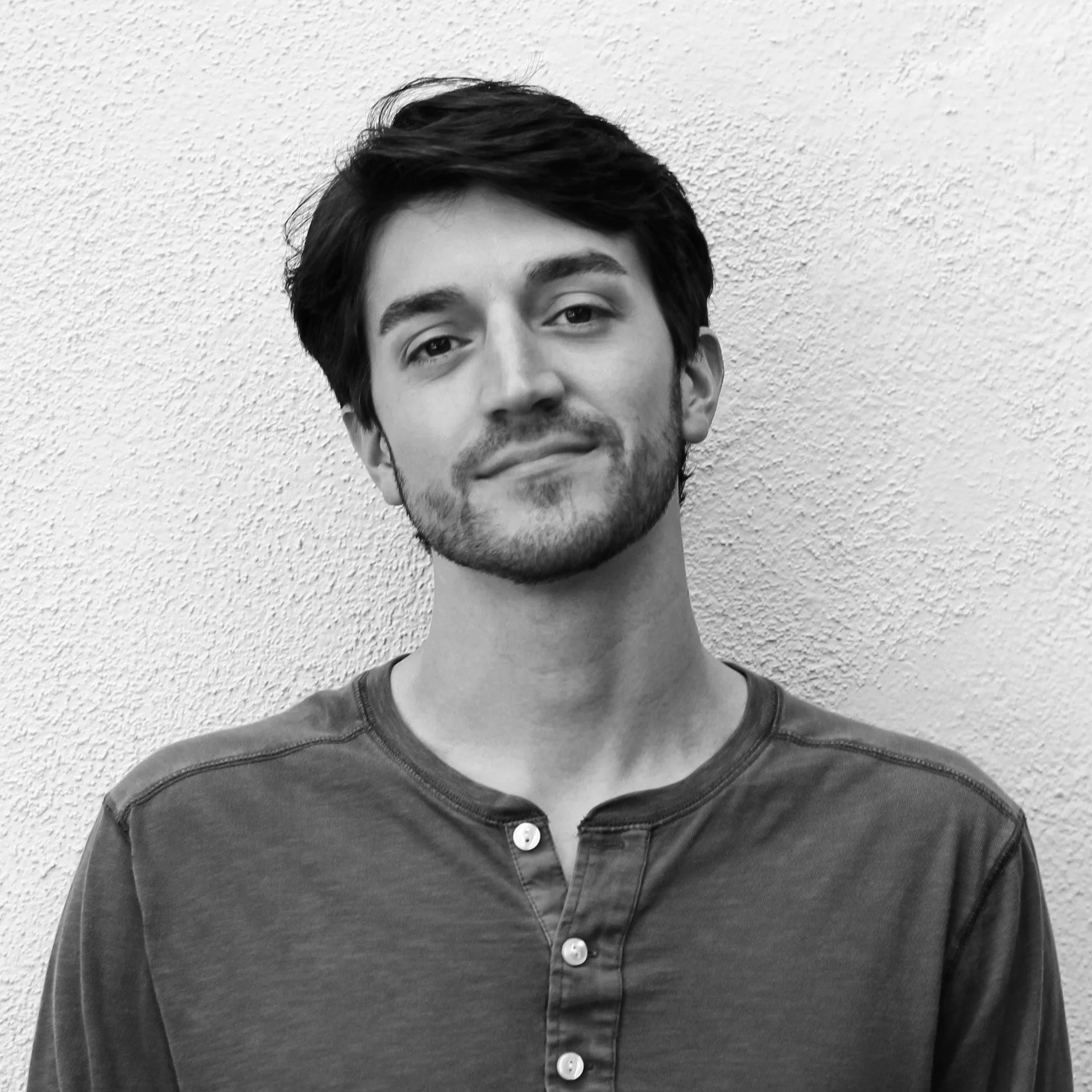
Grant Chemidlin is the author of In the Middle of a Better World (Central Avenue Poetry, 2026) and What We Lost in the Swamp (Central Avenue Poetry, 2023), a finalist for the Lambda Literary Award for Gay Poetry. His poems and essays can be found in Lit Hub, The Los Angeles Review, Palette Poetry, The Florida Review, Quarterly West, and the Academy of American Poets, among other publications. He lives in Los Angeles with his husband and cat, and teaches poetry with PocketMFA and the Poetry Society of New York.