The cryptid’s dating profile declares: Reclaiming Moab from Edward Abbey a la Desert Solitaire
When we finally meet, the cryptid is hard to see. A hum in the rock beneath my left palm. A flicker at the end of my vision. Cool lips pressed against my pulse. My wrist. My carotid artery. Then lower. I close my eyes. I don’t need to see to know that Moab is not “passive,” “virginal,” or any other word an old misogynist slurred across dead trees. You can’t deny the writer had talent. But I’ll bet Narcissus also had a gorgeous way with words, unable to see the pond for his reflection on its surface. As the sun sets behind petrified sand, the cryptid and I eat grocery store sushi with manicured claws. Edward Abbey listed the settler names of every rock and plant I can see. Each mesa sculpted millennia before Eve stepped from Olduvai Gorge. Each cactus drinking from the air. Does naming give us power over any of this? The night traces my skyline, cooling sandstone pressed against my back. In the delicate arch of my ear, the wind roars. I wonder if the cryptid will invite me to dinner again.

The Fraternity of False Fruit
Adam walks a pair of squash-faced dogs,
alabaster legs bared like fangs.
Is he wearing boxers
or heart splattered short-shorts?
Adam has a choice to make.
There are plenty of men with the names of angels
who act the opposite behind closed doors,
the reverent echo of their footfalls hushed
on carpet seas lapping colorless walls.
As a famous disciple warned,
beware of false prophets.
You will know them by their fruits.
The brotherhood of Cain have traded their humanity
for a cherry lozenge of protection.
Cynicism the shield
they prop before empty mirrors.
Dylan Bundy-Gray was having a morning coffee on his porch
when he saw a couple young men
trailing and harassing a high school girl.
He yelled. Told them to stop.
They turned their attention to him.
Gray was a boxer.
For a brief time we trained at the same gym.
But a scared boy drew a gun.
With six bullets,
the boy stole a father from his sons.
As collateral, he shot his friend in the hand.
In the street their blood looks the same.
Adam is lonely.
He is hungry
for something he cannot name.
Eve offers him an apple.
Haunting in Pink
I’m idling at a red light, surviving on Benadryl and hollow promises. He can’t live forever. Across the bus bench advertising personal injury lawyers, the sun-faced Empress spills, flower crown on forest loam curls, a shiny pink bodysuit hugging every bulge and curve. Sunlight rubs against her bare arms like a purring cat. Down the street a single daffodil erupts from the infected foundation of the ghost house. It was painted in shades of peeling Pepto Bismol. What happened there was so bad the city removed every single board and appliance. All that’s left is the basement swirling with technicolor runes of graffiti. Dogs growl every time they pass. The first law of thermodynamics declares that the amount of energy in existence has always been the same. We don’t destroy or create. We just move energy around. Is it not logical that energy–that heightened emotion–that souls–could linger? In the learning co-op I refused to send my sons to, girls learn flower arranging. Boys learn to change tires, plant a garden, and build furniture. My husband said, I mean, I agree that it’s not fair. But we do have boys. It wouldn’t be bad for THEM… But I don’t want my boys thinking that that is the way the world works. Or the way it should. On a hike, I learn a friend’s daughter used to attend that co-op. In a brooding cedar forest, the girl’s pale hair gleams. The kids are playing tag with shadows, flickering in and out of the trees. Until the girl staggers into the light, arms overflowing with trillium. It takes at least seven years for a trillium plant to bloom. Women of the Makah and Quinault tribes believed the bulb could be used as a love potion. The Makah call it sad flower. Many tribes use trillium to stop bleeding after childbirth or to stop menstrual hemorrhages. It is also medicine for the eye. Breath hissing between my teeth, I ask the girl to stop. She keeps yanking, dying blooms a waterfall splattering from her embrace. Her mother says nothing. All these little girls growing up haunted by sad flowers we don’t remember. The traffic light changes. I release the brake from the weight of my foot.The man with the Poseidon beard has stopped his bike to greet the Empress. His dog laps the heartbeat from her outstretched hand.
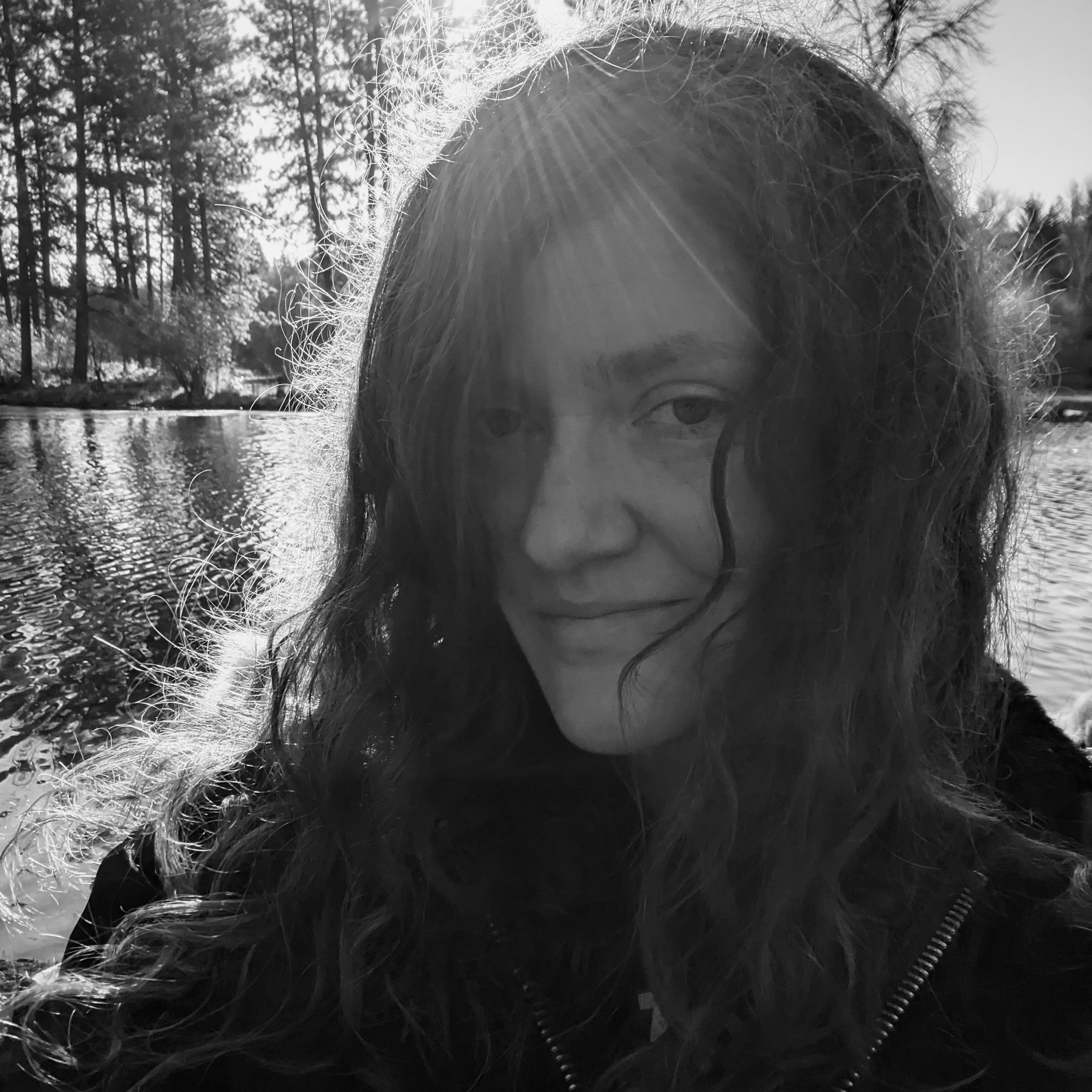
Linea Jantz has worked in roles including waste management, social services, teacher, and paralegal. Among other adventures, she taught Business English in Ukraine (pre-invasion) and helped film a short documentary about women entrepreneurs in the state of Chiapas, Mexico. Her writing features in publications including Palette Poetry, Josephine Quarterly, Strange Hymnal and Beaver Magazine. One of her favorite villain arc songs is the classic “Pancho and Lefty.” If you have time for a little internet rabbit hole, check out Wikipedia for the story of how Townes Van Zandt wrote it.